
No products in the cart.
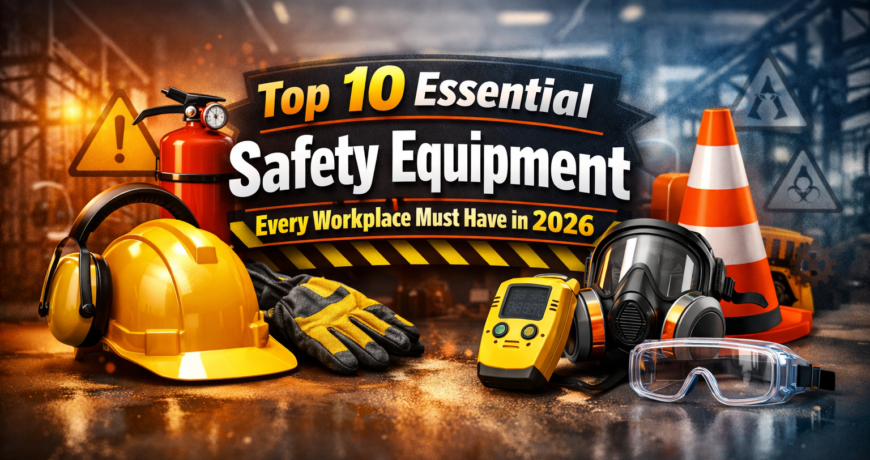
Top 10 Essential Safety Equipment Every Workplace Must Have in 2026 Leave a comment
Workplace safety has become one of the most important priorities for organizations around the world (Safety Equipment). Whether it is a construction site, factory, warehouse, laboratory, or office environment, ensuring employee safety is not only a legal requirement but also a moral responsibility.
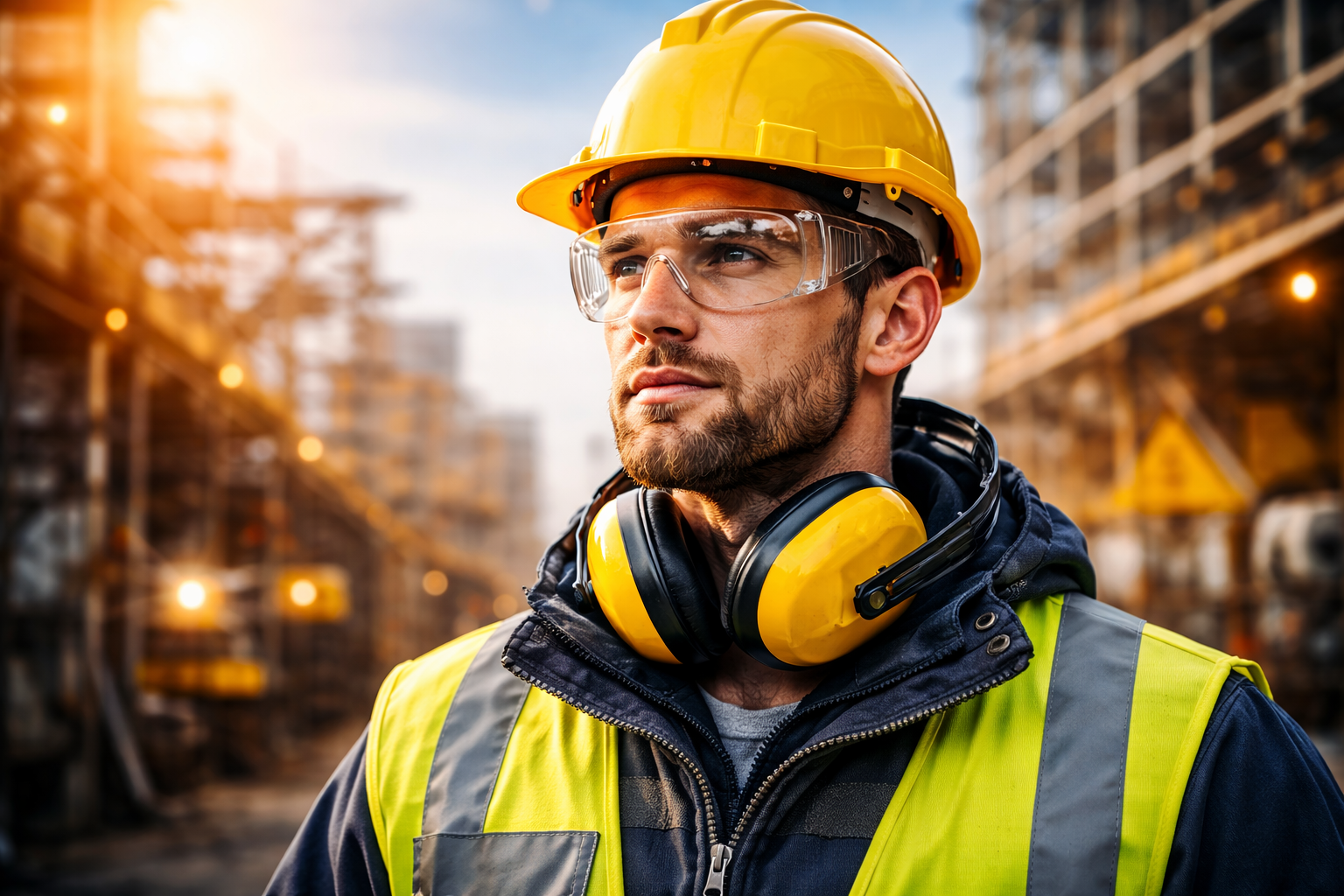 In 2026, industries are increasingly focusing on high-quality safety equipment to protect workers from injuries, accidents, and health hazards. Proper Personal Protective Equipment (PPE) and safety tools significantly reduce workplace incidents and help companies maintain productivity.
In this guide, we will explore the top 10 essential safety equipment every workplace must have in 2026 and why these tools are critical for protecting employees.
1. Safety Helmets (Hard Hats)
Safety helmets are one of the most important pieces of protective equipment, especially in construction, manufacturing, and industrial environments.
These helmets protect workers from:
Falling objects
Head injuries
Electrical hazards
Impact accidents
Modern safety helmets in 2026 are designed with advanced materials, ventilation systems, and adjustable suspension systems for improved comfort and protection.
Companies should always ensure that employees wear certified safety helmets when working in hazardous environments.
2. Safety Gloves
Hands are among the most commonly injured parts of the body in workplaces. Safety gloves help protect workers from cuts, burns, chemicals, and abrasions.
Different industries require different types of gloves, including:
Cut-resistant gloves
Chemical-resistant gloves
Heat-resistant gloves
Disposable nitrile gloves
Choosing the right safety gloves ensures workers can perform tasks safely while maintaining dexterity and grip.
3. Safety Shoes
Foot injuries are extremely common in workplaces involving heavy machinery, construction materials, or sharp objects.
Safety shoes provide protection against:
Falling objects
Punctures
Slips and falls
Electrical hazards
Modern safety footwear features steel toes, anti-slip soles, shock absorption, and waterproof materials, making them essential for industrial workers.
Employers should always ensure workers use certified safety footwear that meets industry safety standards.
4. Protective Eyewear (Safety Goggles)
Eye injuries can occur within seconds and may cause permanent damage. Protective eyewear is essential for workers exposed to:
Flying debris
Dust particles
Chemical splashes
Sparks and welding light
Safety goggles and protective glasses provide a barrier that protects the eyes from harmful elements. In laboratories and industrial environments, wearing eye protection should always be mandatory.
5. Hearing Protection (Earplugs & Earmuffs)
Continuous exposure to loud noise can lead to permanent hearing loss. Industries such as construction, manufacturing, and aviation often expose workers to dangerous noise levels.
Hearing protection devices include:
Foam earplugs
Reusable earplugs
Industrial earmuffs
These devices reduce noise levels and help protect workers’ hearing over long periods of time.
Employers must provide proper hearing protection to employees working in high-noise environments.
6. Respiratory Protection (Masks & Respirators)
Airborne hazards such as dust, chemicals, smoke, and toxic fumes can cause serious respiratory diseases.
Respiratory protective equipment includes:
Dust masks
N95 respirators
Full face respirators
Gas masks
Workers involved in construction, chemical handling, painting, and mining must use proper respiratory protection to prevent inhalation of hazardous particles.
In 2026, respiratory protection has become more advanced, offering better filtration and comfortable designs for long-term use.
7. Gas Detectors
Gas leaks and toxic gases can pose serious threats in industries such as oil & gas, mining, and manufacturing.
Gas detectors help monitor the presence of dangerous gases such as:
Hydrogen sulfide (H₂S)
Carbon monoxide (CO)
Methane
Oxygen deficiency
Modern gas detectors provide real-time monitoring and alerts, allowing workers to take immediate action and avoid life-threatening situations.
8. Fire Safety Equipment
Workplace fires can cause significant damage to property and endanger lives. Proper fire safety equipment is essential for emergency preparedness.
Key fire safety equipment includes:
Fire extinguishers
Fire blankets
Smoke detectors
Fire alarms
Every workplace should conduct regular fire safety training and inspections to ensure equipment remains functional.
Proper fire protection measures can save lives and minimize damage during emergencies.
9. Safety Harness and Fall Protection
Falls are one of the leading causes of workplace injuries, especially in construction and maintenance jobs.
Fall protection equipment includes:
Safety harnesses
Lanyards
Anchor points
Lifelines
Workers operating at heights must use fall protection systems to prevent serious injuries or fatalities.
Modern safety harnesses are designed with ergonomic support and durable materials for maximum safety.
10. First Aid Kits
Despite all preventive measures, accidents can still happen. A well-equipped first aid kit ensures immediate medical response during emergencies.
A workplace first aid kit should contain:
Bandages and gauze
Antiseptic wipes
Burn treatment supplies
Medical gloves
Emergency medications
Employers should also provide basic first aid training to employees so they can respond quickly to workplace injuries.
Many organizations purchase workplace safety supplies from Saudi Supplier, which provides a wide selection of industrial safety products.
Why Workplace Safety Equipment Is Important
Investing in proper safety equipment provides several benefits, including:
Reduced workplace accidents
Improved employee productivity
Compliance with safety regulations
Lower medical and insurance costs
Increased employee confidence and morale
Companies that prioritize safety create a healthier and more efficient work environment.
Final Thoughts
Workplace safety should never be compromised. As industries evolve in 2026, organizations must ensure they are equipped with the latest and most effective safety equipment.
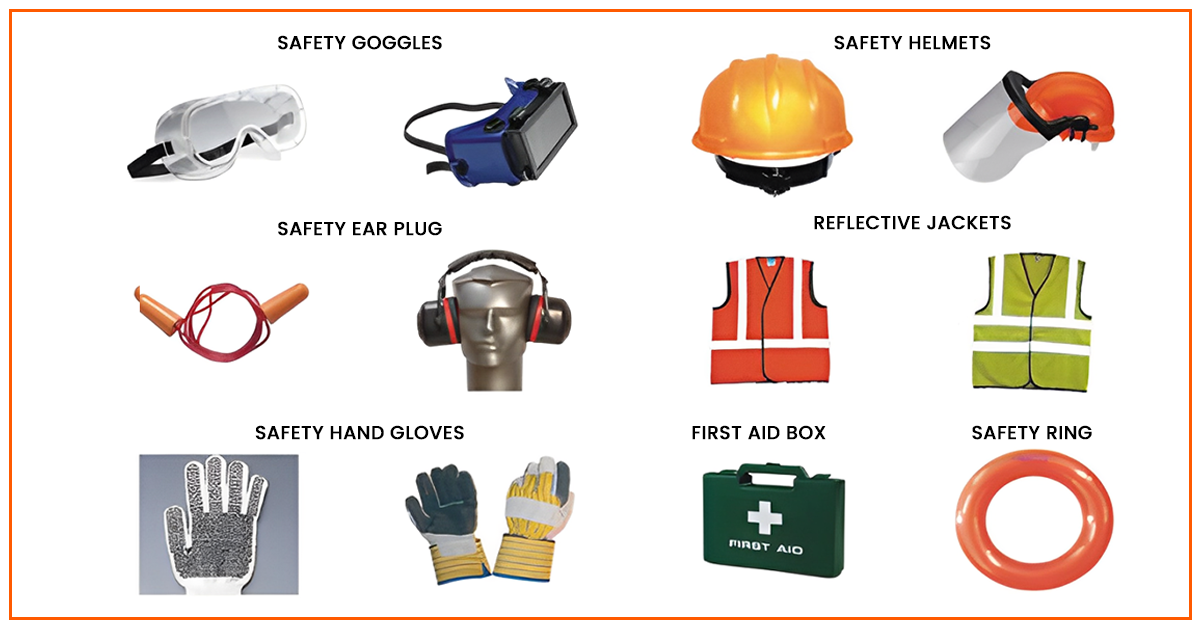
From safety helmets and gloves to gas detectors and fire safety equipment, every item plays a crucial role in protecting employees from potential hazards.
By investing in high-quality safety equipment and implementing proper safety practices, businesses can create a secure workplace where employees can perform their duties with confidence.
Ensuring safety is not just about compliance—it is about protecting lives and building a responsible workplace culture.
