

































Earplugs and earmuffs for plants, workshops, construction sites and airports in Saudi Arabia: 3M E-A-R foam and reusable corded earplugs rated from 25 to 33 dB, Honeywell Bilsom earplugs, 3M Peltor Optime and X2 earmuffs including hard-hat-mounted versions, and earplug dispensers for shared workplaces. Quotes for single boxes or plant-wide quantities.
Hearing Protection
Showing all 16 results
-
Hearing Protection, Personal Protective Equipment
3M E-A-R TaperFit 2 Earplugs 312-1221

3M E-A-R TaperFit Features
- Sizable dimensions TaperFit 2 comfortably suits larger ear canals.
- Each pair of earplugs is readily available or accessible for re-use in a poly container.
- Exceptionally soft polyurethane foam earplugs.
- 32 dB is the noise reduction rating (NRR). AL Class CSA
- 32 dB is the noise reduction rating (NRR). AL Class CSA
- 200 PR/Box10 Box/Case
Check all Hearing Protection from this URL.
SKU: SP45854216773M™Request a Quote -
Hearing Protection, Personal Protective Equipment
3M-1110 CORDED EAR PLUGS 29dB
3M-1110 CORDED EAR PLUG Features
- Corded for ease of use and to stop earbuds from falling out.
- hygienic, smooth, and resistant to dirt
- suitable for ear canal sizes ranging from small to large
- Disposable
- Rating for Reduction of Noise: 29 DBA
Check all Earplugs from this URL.
SKU: SP19583216723M™Request a Quote -
Hearing Protection
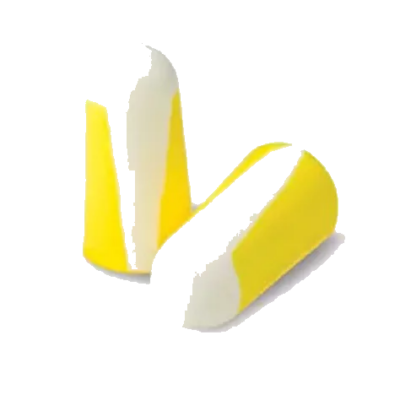
3M-E-A-Rsoft™ Yellow Neons™ Earplug Refill, 391-1004, 33dB
3M-E-A-Rsoft™ Earplug Features
- Tapered shape and smooth soft texture for fit and comfort
- Slow-recovery foam designed for easier insertion
- Compatible with the 3M™ E-A-Rfit™ Validation System.
- Dispenses one earplug at at time with a simple twist of a knob.
- Dispenses earplug directly into hand
- Durable ABS plastic for tough environments
- Free-standing or wall-mounted
- Can be used outside as it shields earplugs from wind and rain
- Mounting holes designed to fit a variety of competitive dispensers
- Bulk style dispenser eliminates waste from individually wrapped earplugs.
SKU: SP71472217043M™Request a Quote -
Hearing Protection
3M-UltraFit™ Corded without Case, 340-4002, 25dB
3M-UltraFit™ Earplug Features
- 3M(TM) E-A-R(TM) UltraFit(TM) Corded Earplugs, Hearing Conservation 340-4002 in Carrying Case 200 PR/Case.
-
The 3M™ E-A-R™ UltraFit™ corded earplugs features a proprietary, premolded, triple-flange design that fits comfortably in most earcanals.
- Reusable triple flange design ensures high protection levels.
- Premolded, triple flange earplug s fit comfortably in a wide range of ear sizes.
SKU: SP69167217023M™Request a Quote -
Hearing Protection, Personal Protective Equipment
3M™ E-A-RSOFT™ SUPERFIT™ EARPLUGS 311-1254, CORDED
3M™ EARPLUGS Features
- The 3M™ E-A-R™ E-A-Rsoft™ SuperFit™ Earplugs, Hearing Conservation, seal the earcanal with soft, slow-recovery foam for excellent noise reduction and reliable hearing protection.
- An orange fitting ring provides a guideline for proper fitting and visual compliance check.
- The earplugs are easy to roll down and insert, then expand within the earcanal for a comfortable, secure fit.
- These regular size earplugs fit most earcanals.
SKU: SP21394216973M™Request a Quote -
Hearing Protection
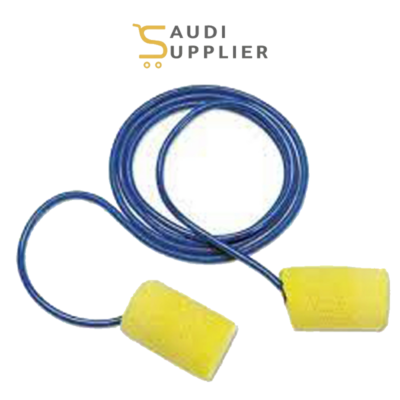
3M™ E-A-R™ Classic™ Earplugs 311-1101, Corded 29 dB*
3M™ Earplugs Features
- 3M™ E-A-R™ Classic™ Earplugs 311-1101 set the standard as the first foam earplugs ever made.
- The Soft, slow-recovery foam is made to fit the shape of your ear canal and protect your hearing.
- A cylindrical form works for most sizes, and there is also a version that is 7% smaller for smaller ear tubes and a version that is 20% longer for bigger ones.
- E-A-Rfit™ provides an accurate quantitative assessment of how much noise reduction a hearing protector provides to an individual worker.
SKU: SP48932216943M™Request a Quote -
Hearing Protection
3M™ E-A-R™ One Touch™ Pro Earplug Dispenser, Blue 391-0000
3M™ E-A-R™ Earplug Dispenser Features
- Earplugs are easy for workers to get to thanks to a dispenser.
- A worker gets an earplug one at a time with an easy turn of the hand.
- The earplugs are safe to use outside thanks to the drainable catch tray, wind side screens, and long-lasting plastic construction.
SKU: SP41337217083M™Request a Quote -
Best Offer, Hearing Protection, Personal Protective Equipment
3M™ E-A-R™ TaperFit™ 2 Earplugs 312-1223, Corded, Regular Size
Best Offer, Hearing Protection, Personal Protective Equipment3M™ E-A-R™ TaperFit™ 2 Earplugs 312-1223, Corded, Regular Size
3M™ E-A-R™ TaperFit™ 2 Earplugs Features
- The tapered form is intended to accommodate the ear canal.
- Noise reduction rating (NRR)*: 28 dB for regular size alone; 32 dB for large size or in combination with regular size.
- Conforming to the contours of the ear canal, soft foam provides a secure, comfortable fit.
- 200 PR/Box10 Box/Case
SKU: SP58892216803M™Request a Quote -
Hearing Protection, Personal Protective Equipment
3M™ E-A-R™ TaperFit™ 2 Large Corded Earplugs
3M™ E-A-R™ TaperFit™ 2 Large Corded Earplugs Features
- Large-size TaperFit 2 fits larger earcanals comfortably
- Fits larger ear canals comfortably
- Corded for easy short term storage around the neck
- Fits larger ear canals comfortably
- Noise Reduction Rating (NRR)*: 32 dB. CSA Class AL
- Corded for easy short term storage around the neck
Check all Hearing Protection from this URL.
SKU: SP61574216833M™Request a Quote -
Hearing Protection
3M™ E-A-R™ UltraFit™ Earplugs 340-4004, Corded
3M™ Earplugs 340-4004 Features
- Premolded, triple flange earplug s fit comfortably in a wide range of ear sizes
- No need to roll earplugs before fitting so the tips stay clean even if hands are dirty.
- The tip stays clean even if hands are dirty or gloves are worn.
- Soft polymer is washable and reusable, reducing both waste and costs
- Poly bag keeps each pair or earplugs available or accessible for re-use
- Noise reduction rating (NRR) 25 dB CSA Class AL
- Test compatible with 3M™ E-A-Rfit™ Validation System
SKU: SP95322217003M™Request a Quote -
Hearing Protection, Ramadan Offers 2026
3M™ Peltor™ Optime™ 98 Cap-Mount Earmuffs, Hearing Conservation H9P3E
Hearing Protection, Ramadan Offers 20263M™ Peltor™ Optime™ 98 Cap-Mount Earmuffs, Hearing Conservation H9P3E
3M™ Cap-Mount Earmuffs Features
- For decibel levels as high as 98 dBA
- Most hard helmets may be mounted using a universal attachment.
- The tilt of the earcup pivot points maximises comfort and effectiveness.
- Compatible with 3M™ E-A-Rfit™ Dual-Ear Validation System.
- E-A-Rfit™ provides an accurate quantitative assessment of how much noise reduction a hearing protector provides to an individual worker.
SKU: SP68612217123M™Request a Quote -
Hearing Protection
3M™ PELTOR™ X2 Earmuffs X2P3E/37276(AAD), Hard Hat Attached
3M™ PELTOR™ Earmuffs Features
- Hearing protection with a noise reduction rating (NRR) of 24 dB that is affixed to a hard headwear for moderately high noise exposures.
- Suitable for a diverse selection of industrial safety hard helmets, including those from the 3M™ H-700 Series (sold separately).
- Compatible with numerous hard helmets without the need for an adapter.
SKU: SP76315217103M™Request a Quote -
Hearing Protection, Personal Protective Equipment
Honeywell Bilsom 303/304 Uncorded Earplug
Bilsom Uncorded Earplug Features:
- Our Earplug is Made of a soft polyurethane foam that expands gently in the ear canal and reduces the tendency to back out of the ear canal.
- Less expansion pressure promotes a more comfortable seal and wears more smoothly over time than other foam earplugs.
- Promote proper hygiene with Smooth, soil-resistant skin that prevents dirt build-up.
- Bilsom Earplug comes with a tapered bullet-shaped design easier to roll down and insert, and it fits the curvature of the ear canal more evenly.
- Ideal for medium to high noise levels.
- Available in different sizes for best fit and protection, ensuring a proper fit for a wide range of users.
Check all Hearing Protection from this URL.
SKU: SP381467856HoneywellRequest a Quote -
Clearance, Hearing Protection, Personal Protective Equipment
Honeywell Pressure Demand Supplied Air Respirator
Clearance, Hearing Protection, Personal Protective EquipmentHoneywell Pressure Demand Supplied Air Respirator
Honeywell Pressure Demand Supplied Air Respirator Features
-
Pressure-demand airflow — Delivers breathable air only during inhalation, prolonging air supply and ensuring efficient use
-
Escape air cylinder option — Equipped with a built-in 5-, 10-, or 15-minute backup cylinder that provides emergency egress when primary air is interrupted .
-
Reliable second-stage regulator and facepiece — Uses the same trusted components found in Honeywell Cougar and Panther SCBAs
-
Full-facepiece protection — Offered with silicone full-face masks (e.g., TwentyTwenty Plus or Puma hood), ensuring clear vision, high protection, and comfort
-
Durable harness and hip-pack — Lightweight Kevlar or nylon waist harness keeps the unit secure and balanced; easily cleaned and maintained
-
NIOSH-approved & IDLH compliant — Meets stringent regulatory requirements for critical and hazardous environments
SKU: SP551884688HoneywellRequest a Quote -
-
Hearing Protection
MMM3111101 – EAR Classic Earplugs
EAR Classic Earplug Description
SOFT SOUND-ABSORBING FOAM: Proprietary foam is initially firm to make fitting the ear plug easier, then softens once it’s in the ear to comfortably conform to the unique shape of each ear canal. For industrial/occupational use only.
Check all Hearing Protection from this URL.
SKU: SP25986216893M™Request a Quote




Top brands in Hearing Protection


When hearing protection is needed
The common action level is a noise exposure of 85 dB(A) averaged over an eight-hour shift: at or above it, hearing protection should be provided and worn. As a rough guide, if two people standing an arm's length apart have to raise their voices to be heard, the noise is probably above that level — grinders, compressors, generators, presses and most power tools are.
Types of hearing protection
| Type | Best for | Examples here |
|---|---|---|
| Disposable foam earplugs | All-day wear, highest attenuation per cost; replace daily | 3M E-A-R Classic (29 dB), E-A-Rsoft Yellow Neons (33 dB), TaperFit 2, 1100 / 1110 |
| Reusable pre-moulded earplugs | Workers who take plugs in and out; washable | 3M E-A-R UltraFit, corded (25 dB) |
| Corded earplugs | Plugs that hang round the neck between tasks and are not lost in machinery | Corded versions of Classic, UltraFit, TaperFit and E-A-Rsoft |
| Headband earmuffs | Intermittent noise, quick on and off, visitors | 3M Peltor Optime and X2 |
| Hard-hat-mounted earmuffs | Sites where a helmet is always worn | 3M Peltor Optime 98 H9P3E, Peltor X2P3E |
| Earplug dispensers | Plants with many workers and visitors | 3M E-A-R One Touch Pro dispenser and refills |
Reading the dB rating
The number on the pack — NRR in the US system, SNR in the European one — is measured in the laboratory, with a perfect fit. Real-world protection is lower. A common rule for estimating it from NRR is to subtract 7 and divide by 2: an NRR 29 dB plug gives roughly 11 dB of protection in practice. In very loud areas, earplugs and earmuffs together add a few more decibels.
Fitting foam earplugs properly
- Roll the plug into a thin, tight crease-free cylinder.
- Reach over your head with the other hand and pull the top of the ear up and back to straighten the ear canal.
- Insert the plug well into the canal and hold it for 20–30 seconds while it expands.
- Check the fit: your own voice should sound muffled and slightly louder inside your head.
For plant-wide supply, send your headcount and noise zones through the quote request page. See also the full PPE range, including hard hats compatible with cap-mount earmuffs.
Frequently asked questions
Earplugs or earmuffs — which is better?
Earplugs usually give more protection for the price and are comfortable in heat under a helmet. Earmuffs are quicker to put on and take off, suit intermittent noise and are easier to check from a distance. In very loud areas use both.
What does 33 dB on earplugs mean?
It is the laboratory noise reduction rating. Expect less in real use: a common estimate is the NRR minus 7, divided by 2. Correct fitting makes the biggest difference.
Can foam earplugs be reused?
They are designed for single use. Replace them at least daily, or sooner if dirty or no longer expanding properly. Choose reusable pre-moulded plugs such as 3M UltraFit if workers need to re-insert them.
Can earmuffs be worn with a hard hat?
Yes, with cap-mount models that clip into the helmet slots, such as 3M Peltor Optime 98 H9P3E and X2P3E. Check that the helmet has accessory slots.
Do you supply earplugs in bulk for factories?
Yes, in boxes and with refill packs for the 3M One Touch Pro dispenser, with delivery across the Kingdom.