


































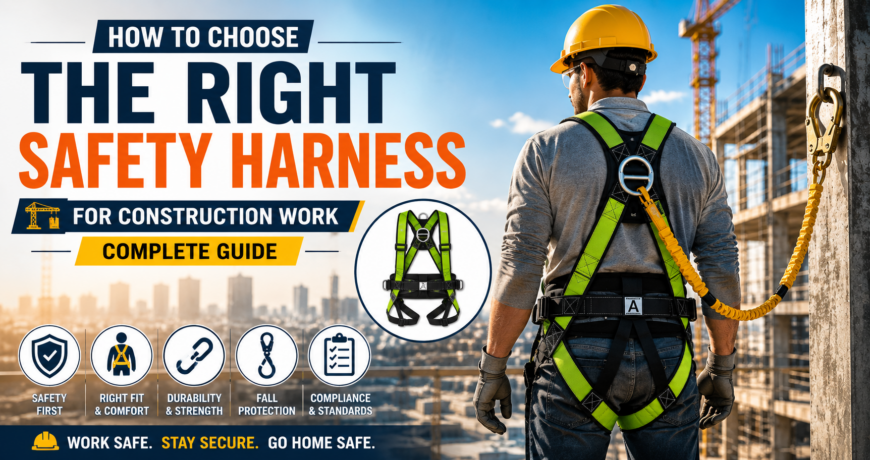
How to Choose the Right Safety Harness for Construction Work | Complete Guide
Construction sites are among the most hazardous workplaces worldwide. Workers frequently perform tasks at elevated heights, including roofing, scaffolding, steel erection, tower maintenance, and structural installations. Falls from height remain one of the leading causes of serious injuries and fatalities in the construction industry, making fall protection systems essential for workplace safety.
A safety harness is one of the most critical components of personal fall protection equipment. However, not all harnesses are designed for the same applications. Choosing the wrong harness can compromise worker safety, reduce comfort, and increase the risk of accidents.
For construction companies, contractors, procurement managers, and safety professionals in Saudi Arabia, selecting the right safety harness is vital for ensuring compliance, improving worker confidence, and minimizing workplace incidents.
This comprehensive guide explains how to choose the right safety harness for construction work, including key features, selection criteria, inspection procedures, and best practices.
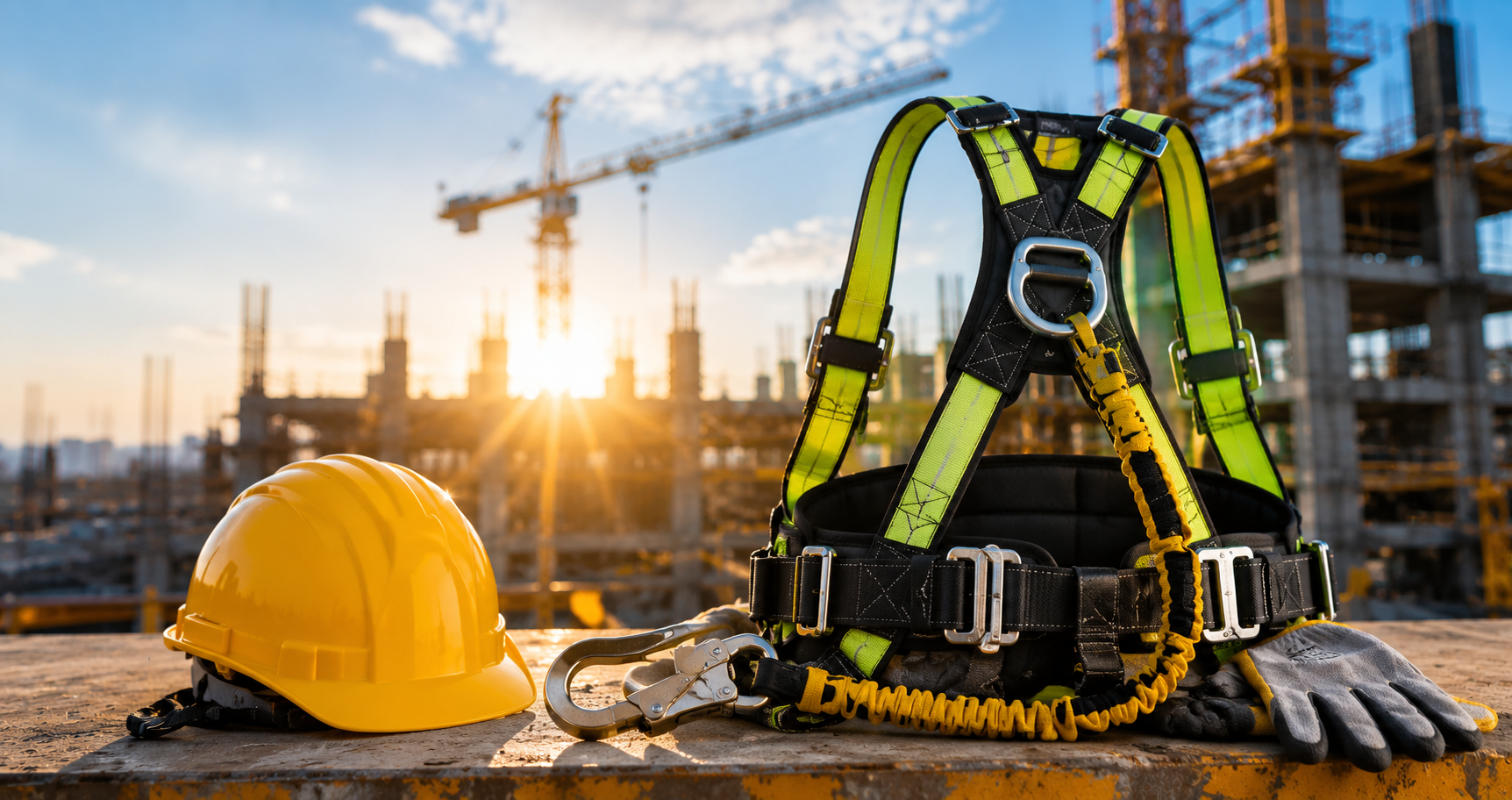
Why Safety Harnesses Are Essential in Construction
Construction workers routinely face fall hazards while working on:
- Scaffolding
- Roofs
- Elevated platforms
- Towers
- Structural steel frameworks
- Ladders
- Cranes
- High-rise buildings
A properly selected and correctly used safety harness can:
- Prevent fatal falls
- Reduce injury severity
- Improve worker confidence
- Ensure compliance with safety regulations
- Enhance overall site safety
When combined with a complete fall protection system, safety harnesses significantly reduce workplace risks.
Construction companies can source quality workplace safety products through:
- https://saudisupplier.com/
- https://saudisupplier.com/product-category/safety-equipment/
- https://saudisupplier.com/product-category/ppe/
Understanding What a Safety Harness Does
A safety harness is designed to distribute fall forces across the strongest areas of the body in the event of a fall.
Unlike body belts, full-body harnesses help:
- Minimize impact forces
- Keep workers in an upright position
- Reduce internal injuries
- Facilitate rescue procedures
A complete fall arrest system typically includes:
- Full-body harness
- Lanyard or self-retracting lifeline (SRL)
- Anchorage point
- Connector devices
Each component must work together to provide effective fall protection.
Types of Safety Harnesses for Construction Work
Different construction activities require different harness configurations.
Basic Full-Body Harness
This is the most common type used in general construction.
Suitable For
- Roofing work
- General construction
- Scaffolding operations
- Elevated maintenance tasks
Features
- Shoulder straps
- Leg straps
- Dorsal D-ring
- Adjustable buckles
Basic harnesses provide reliable fall arrest protection for many construction applications.
Positioning Harness
Positioning harnesses allow workers to maintain stable working positions while keeping both hands free.
Best For
- Tower climbing
- Pole work
- Structural steel installation
These harnesses usually include side D-rings for positioning applications.
Suspension Harness
Suspension harnesses are designed for workers who remain suspended for extended periods.
Common Applications
- Window cleaning
- Rope access operations
- Façade maintenance
- Industrial inspections
Additional support features improve comfort during prolonged use.
Retrieval and Rescue Harness
Some construction environments require specialized rescue capabilities.
These harnesses often include:
- Multiple attachment points
- Shoulder lifting D-rings
- Enhanced rescue functionality
Emergency preparedness should always be considered when selecting fall protection equipment.
Key Factors to Consider When Choosing a Safety Harness
Selecting the appropriate harness requires careful evaluation of workplace conditions and job requirements.
Assess Workplace Hazards
Begin by conducting a detailed hazard assessment.
Consider:
- Working height
- Fall distance
- Type of work performed
- Available anchorage points
- Environmental conditions
- Rescue requirements
A site-specific assessment helps identify the most suitable harness type.
Choose a Full-Body Harness
Modern safety standards strongly recommend full-body harnesses for fall arrest applications.
Full-body harnesses provide:
- Better force distribution
- Improved worker stability
- Enhanced safety during falls
Avoid using outdated body belts for fall arrest purposes.
Verify Safety Certifications
Always ensure that safety harnesses comply with recognized international safety standards.
Look for products that meet applicable requirements such as:
- ANSI standards
- OSHA requirements
- EN standards
- ISO certifications
Certified products provide greater confidence in performance and reliability.
Importance of Proper Fit
Even the highest-quality harness cannot provide adequate protection if it does not fit properly.
Characteristics of a Properly Fitted Harness
The harness should:
- Fit snugly without restricting movement
- Allow full range of motion
- Keep D-rings correctly positioned
- Prevent excessive movement during a fall
Improperly fitted harnesses may increase injury risks.
Adjustable Features to Consider
Look for harnesses with:
- Adjustable shoulder straps
- Adjustable leg straps
- Chest strap adjustments
- Quick-connect buckles
Adjustability ensures compatibility with workers of different body sizes.
Material Quality and Durability
Construction environments can be extremely demanding.
Safety harnesses should be manufactured using high-quality materials capable of withstanding harsh conditions.
Important Material Characteristics
Choose harnesses with:
- Heavy-duty webbing
- Corrosion-resistant hardware
- Reinforced stitching
- Abrasion resistance
- UV resistance
Durable materials extend service life while maintaining safety performance.
Environmental Considerations
Saudi Arabia’s construction sector often involves exposure to:
- High temperatures
- Intense sunlight
- Dust and sand
- Humidity
- Harsh outdoor conditions
Select harnesses designed for these environmental challenges.
Understanding Harness Attachment Points
Different attachment points serve different purposes.
Dorsal D-Ring
Located on the back between the shoulder blades, the dorsal D-ring is the primary attachment point for fall arrest systems.
Side D-Rings
Side D-rings are typically used for:
- Work positioning
- Hands-free operations
Front D-Rings
Front attachment points are commonly used for:
- Ladder climbing systems
- Rescue operations
Shoulder D-Rings
Shoulder attachment points assist rescue personnel during retrieval operations.
Workers should only use attachment points for their intended purposes.
Comfort Matters for Productivity
Workers often wear safety harnesses for extended periods.
Uncomfortable equipment may result in:
- Reduced productivity
- Worker fatigue
- Improper use
- Reduced compliance
Comfort Features to Look For
Consider harnesses featuring:
- Padded shoulder straps
- Back support padding
- Breathable materials
- Lightweight designs
- Ergonomic construction
Comfort encourages consistent and correct use.
Inspection Requirements Before Every Use
Safety harnesses must be inspected before each use.
Pre-Use Inspection Checklist
Inspect the following:
| Component | What to Check |
|---|---|
| Webbing | Cuts, tears, burns, fraying |
| Stitching | Loose or damaged threads |
| Buckles | Cracks, deformation, corrosion |
| D-Rings | Wear, distortion, rust |
| Labels | Legibility and certification markings |
| Hardware | Proper operation and damage |
Any damaged harness should be removed from service immediately.
Best Practices for Safety Harness Use
Choosing the correct harness is only the first step.
Train Workers Properly
Workers should receive training covering:
- Harness fitting procedures
- Equipment inspection
- Fall hazard recognition
- Anchorage selection
- Emergency response procedures
Proper training significantly improves fall protection effectiveness.
Use Compatible Fall Protection Components
Always ensure compatibility between:
- Harnesses
- Lanyards
- Lifelines
- Connectors
- Anchorage systems
Incompatible components may compromise safety.
Never Exceed Equipment Capacity
Manufacturers specify weight limits for fall protection equipment.
Consider:
- Worker weight
- Clothing
- Tools carried
- Additional equipment
Exceeding rated capacity increases risk.
Store Equipment Correctly
Proper storage extends equipment lifespan.
Store harnesses:
- In clean, dry areas
- Away from direct sunlight
- Away from chemicals
- Away from excessive heat
Proper care helps maintain equipment integrity.
Supporting Construction Safety with Quality PPE
Effective fall protection programs require more than harnesses alone.
Construction organizations should also provide:
- Hard hats
- Safety footwear
- High-visibility clothing
- Gloves
- Eye protection
Businesses can explore comprehensive workplace safety solutions through:
- https://saudisupplier.com/product-category/safety-equipment/
- https://saudisupplier.com/product-category/ppe/
- https://saudisupplier.com/product-category/tools/
- https://saudisupplier.com/product-category/construction-materials/
Saudi Supplier supports contractors, industrial organizations, and construction companies across Saudi Arabia with dependable safety and operational products.
Common Mistakes to Avoid
Avoid these common errors when selecting or using safety harnesses:
- Choosing equipment based solely on price
- Ignoring workplace hazard assessments
- Using damaged equipment
- Failing to train workers
- Using incorrect attachment points
- Neglecting inspections
- Purchasing non-certified products
Preventing these mistakes can significantly improve worker safety.
Frequently Asked Questions (FAQs)
1. What type of safety harness is best for construction work?
A full-body harness with appropriate attachment points is generally the best choice for most construction fall protection applications.
2. How often should safety harnesses be inspected?
Harnesses should be visually inspected before each use and undergo periodic formal inspections according to manufacturer recommendations and workplace policies.
3. Can a safety harness be reused after a fall?
No. Any harness subjected to a fall arrest event should be removed from service immediately unless the manufacturer specifically permits reuse after inspection.
4. Why is harness fit important?
A properly fitted harness distributes fall forces correctly and reduces the risk of injury during a fall.
5. How long does a safety harness last?
Service life depends on usage, environmental exposure, maintenance practices, and manufacturer recommendations. Regular inspections help determine replacement needs.
6. What other equipment is needed with a safety harness?
A complete fall protection system typically includes a lanyard or lifeline, connectors, and an approved anchorage point.
Contact Saudi Supplier
Phone: +966565118011
Email: info@saudisupplier.com
Website: https://saudisupplier.com/
