









































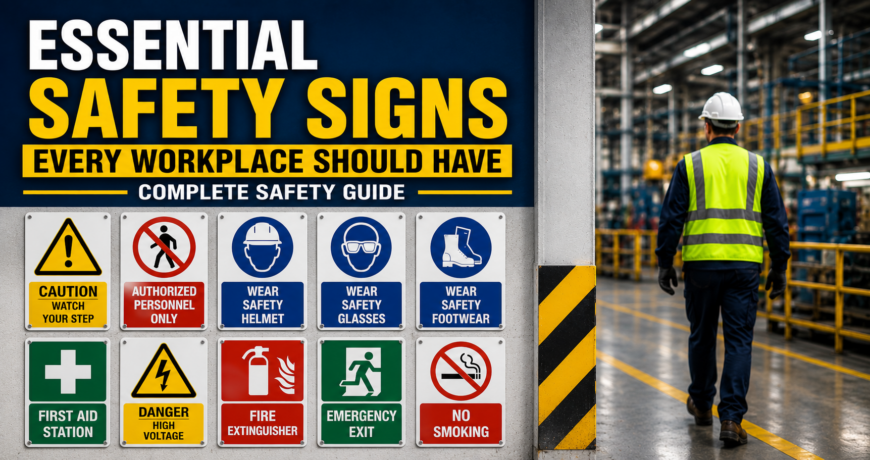
Essential Safety Signs Every Workplace Should Have | Complete Safety Guide
Workplace safety is a shared responsibility between employers and employees. While personal protective equipment (PPE), proper training, and safe operating procedures are critical, safety signs play an equally important role in preventing accidents and ensuring compliance with workplace safety standards. Clear and visible safety signs communicate hazards, provide instructions, guide emergency responses, and remind workers of safe practices.
Whether in construction sites, manufacturing plants, warehouses, logistics centers, healthcare facilities, or commercial buildings, properly placed safety signs help reduce risks, improve awareness, and create a safer working environment.
As Saudi Arabia continues to expand its industrial and infrastructure sectors under Vision 2030, organizations must prioritize effective workplace safety measures, including the use of standardized safety signage.
This guide explains the essential safety signs every workplace should have, their purpose, and best practices for selecting, installing, and maintaining them.
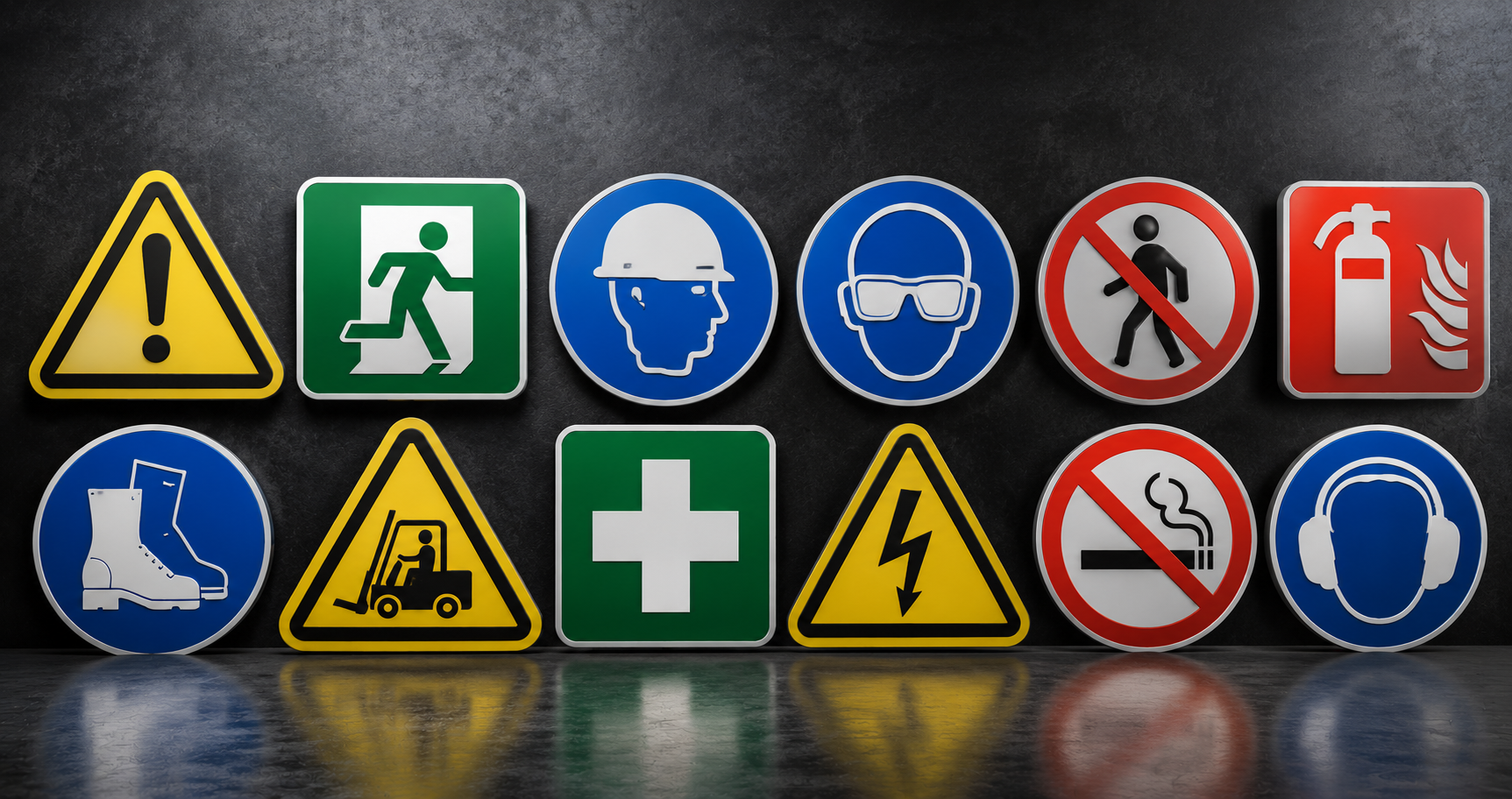
Why Workplace Safety Signs Are Important
Safety signs provide instant visual communication, allowing workers and visitors to recognize hazards quickly and take appropriate action.
Proper safety signage helps organizations:
- Prevent workplace accidents
- Improve hazard awareness
- Guide emergency evacuations
- Support regulatory compliance
- Protect employees and visitors
- Reduce operational risks
- Promote a strong workplace safety culture
Safety signs are most effective when combined with proper employee training and high-quality safety equipment.
Businesses can find workplace safety solutions through:
- https://saudisupplier.com/
- https://saudisupplier.com/product-category/safety-equipment/
- https://saudisupplier.com/product-category/ppe/
Main Categories of Workplace Safety Signs
Safety signs are generally divided into several categories, each serving a different purpose.
Warning Signs
Warning signs alert workers to potential hazards that may cause injury if precautions are not taken.
Common warning signs include:
- High voltage
- Slippery floor
- Forklift operating area
- Falling objects
- Hot surface
- Chemical hazard
- Overhead work
These signs encourage workers to remain alert in hazardous areas.
Prohibition Signs
Prohibition signs indicate actions that are not allowed.
Examples include:
- No smoking
- No open flames
- No unauthorized entry
- No mobile phones
- No food or drinks
- Do not touch
These signs help prevent unsafe behavior that could lead to accidents.
Mandatory Signs
Mandatory signs instruct workers to perform specific safety actions.
Examples include:
- Wear safety helmet
- Wear safety glasses
- Wear hearing protection
- Wear safety gloves
- Use fall protection
- Safety footwear required
Mandatory signs reinforce PPE compliance throughout the workplace.
Companies can equip employees with appropriate PPE by visiting:
https://saudisupplier.com/product-category/ppe/
Emergency Information Signs
Emergency signs provide critical information during incidents.
Examples include:
- Emergency exit
- Fire exit
- Assembly point
- First aid station
- Emergency shower
- Eyewash station
- Emergency telephone
Clearly visible emergency signs help reduce confusion during emergencies.
Fire Safety Signs
Fire safety signs identify firefighting equipment and fire protection systems.
Typical examples include:
- Fire extinguisher
- Fire alarm
- Fire hose reel
- Fire blanket
- Sprinkler control valve
Proper identification allows quick response during fire emergencies.
Essential Safety Signs for Different Workplace Areas
Different industries require different combinations of safety signs.
Construction Sites
Construction environments should display:
- Hard hat area
- High-visibility clothing required
- Crane operating zone
- Falling objects
- Authorized personnel only
- Excavation warning
- Work at height warning
Construction projects benefit from combining safety signs with quality PPE and construction materials available through:
- https://saudisupplier.com/product-category/construction-materials/
- https://saudisupplier.com/product-category/safety-equipment/
Manufacturing Facilities
Manufacturing plants typically require signs for:
- Machine hazards
- Lockout/tagout procedures
- Noise protection
- Moving equipment
- Electrical hazards
- Chemical storage
- Emergency exits
Proper signage helps reduce accidents involving machinery and production equipment.
Warehouses and Distribution Centers
Warehouse safety signs often include:
- Forklift traffic
- Pedestrian walkways
- Loading dock warnings
- Speed limits
- Storage capacity
- Emergency evacuation routes
These signs improve traffic management and reduce collision risks.
Understanding Safety Sign Colors
Safety signs use standardized colors to communicate information quickly.
| Color | Meaning | Typical Use |
|---|---|---|
| Red | Prohibition or fire equipment | No smoking, fire extinguisher |
| Yellow | Warning | Hazard areas, caution |
| Blue | Mandatory action | PPE requirements |
| Green | Safe condition | Emergency exits, first aid |
Using standardized colors improves recognition and supports international safety practices.
Best Practices for Safety Sign Placement
Even the best safety signs are ineffective if placed incorrectly.
Position Signs Where Hazards Exist
Signs should be installed:
- Near hazardous equipment
- At entry points
- Along pedestrian routes
- Near emergency equipment
- At workstations
Workers should see warning signs before entering hazardous areas.
Ensure Good Visibility
Safety signs should:
- Be clearly visible
- Remain unobstructed
- Use appropriate lighting
- Be installed at eye level where possible
Poor visibility reduces their effectiveness.
Use Durable Materials
Industrial environments often expose signage to:
- Dust
- Heat
- Moisture
- Chemicals
- UV radiation
Choose signs manufactured from durable, weather-resistant materials for long-term performance.
Combining Safety Signs with Workplace Safety Equipment
Safety signs alone cannot eliminate workplace hazards.
Effective safety programs also require:
- Personal protective equipment
- Machine guards
- Fire protection systems
- Safe work procedures
- Employee training
Organizations can strengthen workplace safety by sourcing quality products through:
- https://saudisupplier.com/product-category/safety-equipment/
- https://saudisupplier.com/product-category/ppe/
- https://saudisupplier.com/product-category/tools/
A comprehensive approach delivers the best safety outcomes.
Employee Training Is Essential
Workers should understand the meaning of every safety sign displayed in the workplace.
Training programs should explain:
- Safety sign categories
- Color meanings
- Emergency procedures
- PPE requirements
- Hazard reporting
Employees who understand workplace signage respond more effectively to potential hazards.
Maintaining Workplace Safety Signs
Safety signs require regular inspection to remain effective.
Inspection Checklist
Check for:
- Fading colors
- Physical damage
- Missing signs
- Dirt accumulation
- Poor visibility
- Outdated information
Replace damaged or faded signs immediately.
Routine inspections help maintain a safe working environment.
Common Mistakes to Avoid
Organizations should avoid these common signage errors:
- Installing too few signs
- Using confusing wording
- Blocking sign visibility
- Ignoring damaged signs
- Using incorrect safety colors
- Failing to train employees
- Overcrowding work areas with unnecessary signs
Well-planned signage is clear, visible, and easy to understand.
Benefits of Effective Workplace Safety Signage
Investing in proper safety signs offers numerous long-term benefits.
These include:
- Reduced workplace accidents
- Faster emergency response
- Improved regulatory compliance
- Better employee awareness
- Increased operational efficiency
- Lower liability risks
- Stronger workplace safety culture
Combined with quality equipment and training, safety signs become an essential part of every workplace safety program.
Supporting Workplace Safety with Saudi Supplier
Saudi Supplier provides businesses across Saudi Arabia with a comprehensive range of workplace safety products, PPE, industrial tools, and construction materials.
Explore available product categories:
- https://saudisupplier.com/
- https://saudisupplier.com/product-category/safety-equipment/
- https://saudisupplier.com/product-category/ppe/
- https://saudisupplier.com/product-category/tools/
- https://saudisupplier.com/product-category/construction-materials/
Choosing reliable workplace safety products helps organizations create safer, more productive environments while protecting employees and maintaining operational excellence.
Frequently Asked Questions (FAQs)
1. Why are workplace safety signs important?
Safety signs communicate hazards, provide safety instructions, guide emergency responses, and help prevent workplace accidents.
2. What are the main types of safety signs?
The primary categories include warning signs, prohibition signs, mandatory signs, emergency information signs, and fire safety signs.
3. Where should safety signs be installed?
Safety signs should be placed near hazards, entrances, emergency exits, machinery, workstations, and any location where safety information is required.
4. How often should workplace safety signs be inspected?
Safety signs should be inspected regularly for damage, fading, visibility, and accuracy. Replace any signs that are worn or no longer legible.
5. Can safety signs replace PPE?
No. Safety signs are designed to complement PPE and other safety measures, not replace them. Workers should always use appropriate personal protective equipment.
6. How do safety signs improve workplace safety?
Safety signs increase hazard awareness, encourage safe behavior, improve emergency preparedness, and help organizations reduce workplace accidents.
Contact Saudi Supplier
Phone: +966565118011
Email: info@saudisupplier.com
Website: https://saudisupplier.com/
