








































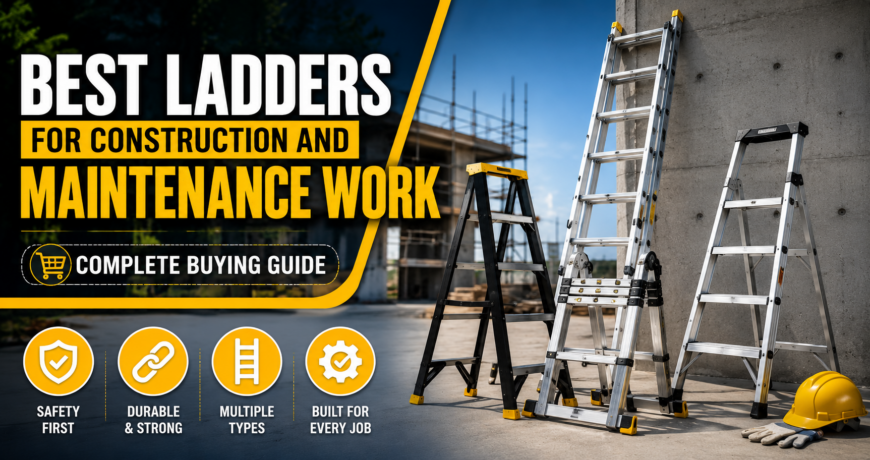
Best Ladders for Construction and Maintenance Work | Complete Buying Guide
Ladders are among the most commonly used tools in construction, facility maintenance, industrial operations, warehousing, and commercial building management. Whether installing electrical systems, performing inspections, painting walls, repairing roofs, or maintaining equipment, choosing the right ladder is essential for both productivity and workplace safety.
Despite their everyday use, ladders are involved in a significant number of workplace accidents each year. Many of these incidents result from using the wrong type of ladder, exceeding weight limits, improper setup, or inadequate maintenance. Investing in high-quality ladders and following safe work practices can significantly reduce these risks.
For contractors, procurement professionals, facility managers, and industrial businesses in Saudi Arabia, selecting the best ladder involves considering the working environment, load capacity, material, height requirements, and safety features.
This comprehensive guide explains the best ladders for construction and maintenance work, key selection factors, and practical safety recommendations to help businesses make informed purchasing decisions.

Why Choosing the Right Ladder Matters
A ladder is more than just a climbing tool. It provides workers with safe access to elevated areas while supporting productivity and efficiency.
Using the right ladder helps organizations:
- Improve worker safety
- Reduce fall-related accidents
- Increase job efficiency
- Protect expensive equipment
- Support regulatory compliance
- Lower maintenance costs
- Improve worker confidence
Choosing a ladder based only on price can compromise safety and result in higher long-term costs.
Businesses can explore industrial tools and workplace equipment through:
- https://saudisupplier.com/
- https://saudisupplier.com/product-category/tools/
- https://saudisupplier.com/product-category/construction-materials/
Common Types of Ladders Used in Construction and Maintenance
Different jobs require different ladder designs. Selecting the appropriate type ensures better performance and safety.
Step Ladders
Step ladders are self-supporting and ideal for tasks that do not require leaning against a wall.
Best Applications
- Electrical work
- Painting
- Ceiling maintenance
- Warehouse operations
- Indoor inspections
Advantages
- Easy setup
- Portable design
- Stable platform
- Suitable for confined spaces
Step ladders are among the most versatile options for everyday maintenance work.
Extension Ladders
Extension ladders consist of two or more sections that extend to reach greater heights.
Ideal For
- Roofing
- Exterior building maintenance
- Window installation
- Construction projects
- High wall repairs
These ladders require stable support against a solid structure.
Multi-Purpose Ladders
Multi-purpose ladders offer flexibility by converting into different configurations.
Common configurations include:
- Step ladder
- Extension ladder
- Staircase ladder
- Scaffold support
Their versatility makes them popular among contractors who perform various tasks.
Platform Ladders
Platform ladders feature a standing platform near the top.
Benefits include:
- Greater stability
- Improved comfort
- Better balance
- Reduced worker fatigue
These ladders are particularly useful for tasks requiring extended working periods.
Fiberglass Ladders
Fiberglass ladders are highly recommended for electrical work.
Advantages
- Non-conductive material
- Excellent durability
- Corrosion resistance
- Suitable for outdoor use
Electricians and maintenance personnel frequently choose fiberglass ladders because they reduce electrical hazards.
Aluminum Ladders
Aluminum ladders are widely used due to their lightweight construction.
Benefits
- Easy transportation
- Rust resistance
- Affordable pricing
- High strength-to-weight ratio
However, aluminum ladders should never be used near energized electrical equipment because they conduct electricity.
Steel Ladders
Steel ladders offer excellent strength for heavy-duty applications.
Typical uses include:
- Industrial facilities
- Warehouses
- Manufacturing plants
Although durable, they are generally heavier than aluminum and fiberglass alternatives.
Comparison of Popular Ladder Types
| Ladder Type | Best For | Key Advantages |
|---|---|---|
| Step Ladder | Indoor maintenance | Self-supporting, portable |
| Extension Ladder | Exterior work | Reaches greater heights |
| Multi-Purpose Ladder | Versatile tasks | Multiple configurations |
| Platform Ladder | Long-duration work | Greater stability |
| Fiberglass Ladder | Electrical work | Non-conductive |
| Aluminum Ladder | General construction | Lightweight and durable |
Choosing the correct ladder depends on the specific work environment and operational requirements.
Key Factors to Consider When Choosing a Ladder
Before purchasing a ladder, businesses should evaluate several important factors.
Working Height
Choose a ladder that allows workers to reach their task comfortably without standing on the top steps or overreaching.
Using a ladder that is too short increases fall risks.
Load Capacity
Every ladder has a maximum weight rating.
The total load should include:
- Worker weight
- Tools
- Equipment
- Materials being carried
Never exceed the manufacturer’s specified load limit.
Material Selection
Material choice depends on workplace conditions.
| Material | Best Application |
|---|---|
| Fiberglass | Electrical work |
| Aluminum | General maintenance |
| Steel | Heavy industrial use |
Selecting the proper material improves both safety and durability.
Job Site Conditions
Consider workplace conditions such as:
- Indoor or outdoor use
- Uneven surfaces
- Weather exposure
- Electrical hazards
- Space limitations
Environmental conditions influence ladder performance and safety.
Essential Ladder Safety Features
Modern ladders include several safety features designed to reduce accident risks.
Look for:
- Slip-resistant feet
- Wide steps
- Secure locking mechanisms
- Reinforced side rails
- Non-slip platforms
- Stabilizer bars
Quality construction improves worker confidence and stability.
Ladder Safety Best Practices
Even the highest-quality ladder requires proper use.
Inspect Before Every Use
Workers should inspect ladders for:
- Cracked rails
- Loose rivets
- Damaged steps
- Bent components
- Worn feet
- Corrosion
Damaged ladders should be removed from service immediately.
Set Up Correctly
Proper setup includes:
- Placing the ladder on firm, level ground
- Fully extending locking mechanisms
- Securing extension ladders
- Maintaining proper climbing angles
Incorrect setup is one of the leading causes of ladder accidents.
Maintain Three Points of Contact
Workers should maintain:
- Two hands and one foot
- Or two feet and one hand
This technique improves stability while climbing.
Avoid Overreaching
Workers should reposition the ladder instead of leaning excessively.
Overreaching shifts the center of gravity and increases fall risk.
Personal Protective Equipment for Ladder Work
Ladder safety extends beyond choosing the right equipment.
Workers may require:
- Safety helmets
- Non-slip safety footwear
- Safety gloves
- High-visibility clothing
- Fall protection harnesses (where applicable)
Organizations can source quality PPE through:
- https://saudisupplier.com/product-category/ppe/
- https://saudisupplier.com/product-category/safety-equipment/
Combining ladders with appropriate PPE creates a safer working environment.
Ladder Maintenance Tips
Routine maintenance extends ladder lifespan and improves reliability.
Maintenance Checklist
- Clean after use
- Inspect locking mechanisms
- Tighten loose hardware
- Replace worn feet
- Store in dry locations
- Protect from chemical exposure
Well-maintained ladders perform more safely and last longer.
Common Mistakes to Avoid
Many ladder accidents result from preventable mistakes.
Avoid:
- Using damaged ladders
- Standing on the top step
- Exceeding weight limits
- Using aluminum ladders near electricity
- Placing ladders on unstable surfaces
- Carrying heavy loads while climbing
- Ignoring manufacturer instructions
Safe ladder practices significantly reduce workplace injuries.
Choosing Reliable Industrial Suppliers
Purchasing ladders from trusted suppliers helps ensure product quality, durability, and compliance with recognized safety standards.
Reliable suppliers offer:
- Certified products
- Durable materials
- Quality assurance
- Technical support
- Consistent product availability
Saudi Supplier supports businesses across Saudi Arabia with industrial tools, construction materials, PPE, and workplace safety equipment.
Explore available categories:
- https://saudisupplier.com/
- https://saudisupplier.com/product-category/tools/
- https://saudisupplier.com/product-category/construction-materials/
- https://saudisupplier.com/product-category/safety-equipment/
- https://saudisupplier.com/product-category/ppe/
Selecting dependable equipment helps contractors complete projects safely while improving operational efficiency.
Frequently Asked Questions (FAQs)
1. Which ladder is best for construction work?
Extension ladders and multi-purpose ladders are commonly used for construction projects because they provide greater height and flexibility.
2. Are fiberglass ladders better than aluminum ladders?
Fiberglass ladders are safer for electrical work because they are non-conductive, while aluminum ladders are lighter and better suited for general maintenance tasks.
3. How do I choose the correct ladder height?
Select a ladder that allows you to reach your work area comfortably without standing on the top steps or overreaching.
4. How often should ladders be inspected?
Ladders should be inspected before every use and undergo regular maintenance checks to identify damage or wear.
5. What PPE should be used when working on ladders?
Depending on the job, workers should wear safety helmets, gloves, non-slip safety footwear, high-visibility clothing, and fall protection equipment where necessary.
6. Why is load capacity important when selecting a ladder?
The ladder must safely support the combined weight of the worker, tools, and materials to prevent structural failure and reduce accident risks.
Contact Saudi Supplier
Phone: +966565118011
Email: info@saudisupplier.com
Website: https://saudisupplier.com/
