




































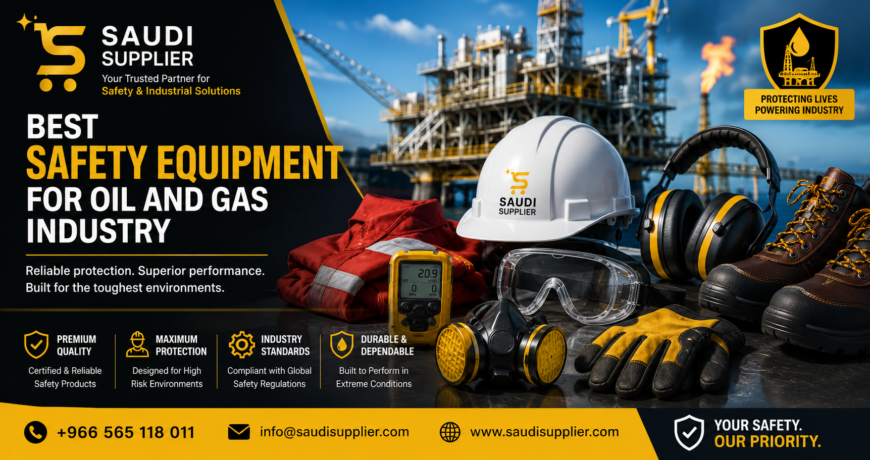
Best Safety Equipment for Oil and Gas Industry | Saudi Supplier
The oil and gas industry involves some of the most demanding working environments in the industrial sector. Exploration, drilling, refining, processing, storage, transportation, and maintenance activities can expose workers to multiple hazards at the same time. These may include flammable gases, toxic substances, high temperatures, pressurized systems, moving machinery, electrical hazards, falling objects, and challenging outdoor conditions.
Because of this, selecting the right safety equipment is not simply a purchasing decision. It is an important part of an organization’s overall risk-management strategy. The right combination of personal protective equipment (PPE), gas detection, fall protection, emergency equipment, and site safety products can help reduce exposure to hazards and support safer working conditions.
For companies, contractors, procurement teams, and facility managers in Saudi Arabia, safety equipment should be selected according to the actual hazards present at each worksite, the tasks employees perform, manufacturer instructions, and applicable workplace requirements.
Saudi Supplier provides industrial and workplace products for businesses looking to source equipment from a dedicated industrial supplier. Explore the Saudi Supplier website for industrial, safety, PPE, tools, and construction-related products.

Why Safety Equipment Is Critical in Oil and Gas
Oil and gas facilities can contain several different hazards within the same work area. For example, a maintenance technician may face electrical hazards while working near flammable hydrocarbons, while a worker at an elevated platform may simultaneously require fall protection and respiratory protection.
Therefore, safety planning should begin with a hazard assessment rather than simply selecting PPE from a standard checklist.
Properly selected equipment can help protect workers from:
- Chemical splashes and hazardous substances
- Flammable gases and vapors
- Flying particles and debris
- High noise levels
- Falling objects
- Cuts and abrasions
- Heat and flames
- Electrical hazards
- Falls from elevated surfaces
- Respiratory contaminants
- Poor visibility
- Mechanical hazards
Importantly, PPE should complement engineering controls, administrative controls, safe operating procedures, and emergency planning. It should not be considered the only method of controlling workplace hazards.
Essential Safety Equipment for Oil and Gas Operations
Different oil and gas activities require different protective equipment. However, several categories are commonly important across industrial environments.
1. Flame-Resistant Protective Clothing
Flame-resistant clothing is particularly important in environments where workers could be exposed to flash fire or other thermal hazards.
Depending on the job and hazard assessment, protective clothing may include:
- Flame-resistant coveralls
- Protective jackets
- Work trousers
- Chemical-resistant garments
- High-visibility clothing
- Heat-resistant protective clothing
The selected garment should be appropriate for the specific hazard rather than chosen solely because it is labeled as “industrial” or “fire resistant.”
Workers should also follow garment-care instructions because improper laundering, contamination, or damage can affect protective performance.
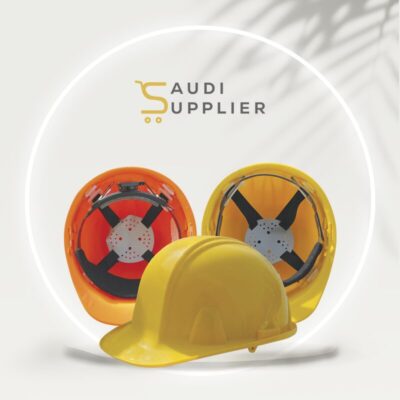
2. Safety Helmets
Head protection is essential at many oil and gas worksites because workers can be exposed to falling tools, materials, structural components, and other impact hazards.
A suitable industrial safety helmet should provide appropriate protection for the workplace and fit securely.
Before purchasing helmets, companies should consider:
- Impact protection
- Electrical protection where applicable
- Fit and adjustability
- Chin-strap requirements
- Compatibility with other PPE
- Ventilation
- Environmental conditions
Helmets should be inspected regularly and replaced according to manufacturer guidance or after significant impact or damage.
3. Safety Goggles and Face Protection
Oil and gas workers can encounter chemical splashes, dust, flying particles, and other eye hazards.
Safety glasses, goggles, and face shields each serve different purposes.
For example:
| Protection | Typical Application |
|---|---|
| Safety glasses | General eye protection |
| Sealed goggles | Splash and particle protection |
| Face shield | Face protection against specific hazards |
| Welding protection | Welding and cutting operations |
| Chemical goggles | Chemical handling and splash hazards |
Face shields often need to be used with suitable eye protection rather than automatically replacing it.
Businesses can explore Saudi Supplier’s safety equipment category for workplace protection products.
4. Protective Gloves
Hand protection should be selected according to the specific task.
Oil and gas workers may need protection against:
- Chemicals
- Cuts
- Abrasion
- Heat
- Punctures
- Mechanical hazards
- Certain electrical hazards
There is no single glove that provides maximum protection against every hazard.
For this reason, procurement teams should identify the substance, task, exposure time, required dexterity, and relevant performance requirements before selecting gloves.
The PPE category at Saudi Supplier can be used when reviewing protective equipment options.
5. Safety Footwear
Workers frequently move across uneven, oily, wet, or industrial surfaces.
Safety footwear can help protect against hazards such as:
- Falling objects
- Compression
- Punctures
- Slips
- Certain chemical exposures
- Environmental conditions
Depending on the workplace, features may include protective toe caps, slip-resistant soles, penetration resistance, or other specialized properties.
Footwear should fit properly and be appropriate for the specific work environment.
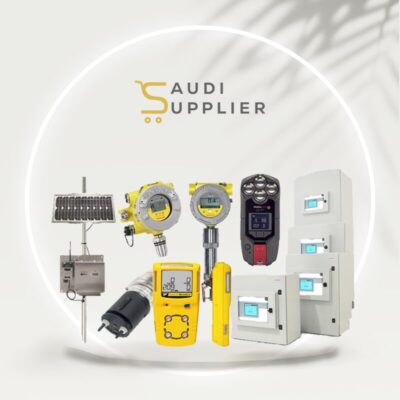
6. Gas Detection Equipment
Gas detection is one of the most important safety considerations in many oil and gas operations.
Potentially hazardous atmospheres can contain substances such as:
- Hydrogen sulfide
- Carbon monoxide
- Combustible gases
- Oxygen-deficient atmospheres
Portable gas detectors can help workers identify hazardous atmospheric conditions before or during certain tasks.
Depending on the application, organizations may use:
- Single-gas detectors
- Multi-gas detectors
- Portable area monitors
- Fixed gas detection systems
Gas detection equipment should be selected, calibrated, bump-tested, maintained, and operated according to the manufacturer’s instructions and the organization’s gas-monitoring program.
7. Respiratory Protection
Some oil and gas activities can expose workers to airborne contaminants.
Respiratory protection may include filtering respirators or supplied-air systems, depending on the hazard.
However, respiratory protection should be selected only after evaluating the contaminant, concentration, oxygen level, task duration, and other conditions.
A respirator that is suitable for one contaminant may not provide protection against another.
A comprehensive respiratory protection program should also address fit testing, training, maintenance, storage, and replacement requirements.
8. Hearing Protection
Oil and gas facilities can contain high-noise sources such as compressors, pumps, turbines, drilling equipment, generators, and other machinery.
Common hearing protection options include:
- Earplugs
- Earmuffs
- Specialized hearing protection
Where noise exposure is significant, employers should use appropriate noise controls and determine when hearing protection is required.
9. Fall Protection Equipment
Work at height is common in many oil and gas environments, including platforms, towers, scaffolding, elevated walkways, and maintenance areas.
Fall protection systems may include:
- Full-body harnesses
- Lanyards
- Self-retracting lifelines
- Anchorage systems
- Horizontal lifelines
- Vertical lifelines
Fall protection equipment must be compatible with the complete system and appropriate for the work being performed.
Workers should be trained in proper inspection, fitting, connection, use, and emergency procedures.
10. Respiratory and Chemical Protection
Chemical handling, maintenance, cleaning, and processing activities can create exposure risks.
Depending on the substance and task, workers may need specialized protective clothing, gloves, goggles, face protection, or respiratory equipment.
Safety Data Sheets (SDS) should be consulted when determining appropriate protective measures for hazardous chemicals.
Additional Site Safety Equipment
PPE is only one part of oil and gas workplace protection. Sites may also require equipment that helps control access, communicate hazards, and manage emergencies.
Important examples include:
- Safety barriers
- Warning signs
- Emergency showers
- Eyewash stations
- Spill-control equipment
- Fire extinguishing equipment
- First-aid supplies
- Lockout/tagout equipment
- Safety cones
- Barricade systems
- Emergency lighting
Businesses can also review industrial tools and construction materials when planning broader site requirements.
How to Choose the Right Safety Equipment
Choosing oil and gas safety equipment requires more than comparing prices. Procurement teams should use a systematic process.
Step 1: Conduct a Hazard Assessment
Identify the hazards associated with each job and work area.
Consider:
- Chemical exposure
- Fire and explosion risks
- Gas exposure
- Electrical hazards
- Noise
- Heat
- Work at height
- Mechanical hazards
- Environmental conditions
Step 2: Match Equipment to the Hazard
Once hazards are identified, select equipment designed for those specific risks.
For example, chemical-resistant gloves should be selected according to the chemicals involved, while fall protection should be designed around the complete fall-arrest or fall-restraint system.
Step 3: Verify Standards and Certification
Procurement teams should verify the applicable standards, certification, manufacturer documentation, and product specifications before purchase.
Requirements can vary according to the type of equipment and intended application.
Step 4: Consider Compatibility
PPE must work together.
For example, a safety helmet, hearing protection, face shield, respirator, and eye protection should not interfere with each other.
Poor compatibility can reduce comfort and may encourage workers to remove equipment during a task.
Step 5: Consider Saudi Working Conditions
Saudi industrial environments can present demanding climatic conditions, particularly during hot periods.
When selecting equipment, businesses should consider:
- Heat
- Dust
- Outdoor exposure
- Humidity in relevant locations
- Long working periods
- Equipment storage conditions
Comfort matters because workers are more likely to wear properly selected PPE consistently.
Safety Equipment Inspection and Maintenance
Buying quality safety equipment is only the beginning.
Organizations should establish procedures for inspection, cleaning, storage, maintenance, and replacement.
For example:
Before use: Workers should check PPE for visible damage or defects.
During scheduled inspections: Competent personnel should assess equipment according to the manufacturer’s instructions and site procedures.
After an incident: Equipment exposed to a significant impact, contamination, or other damaging event should be evaluated before reuse.
Equipment that is damaged, expired, contaminated beyond acceptable limits, or otherwise unsuitable should be removed from service.
Common Safety Equipment Purchasing Mistakes
Buying Based Only on Price
A low purchase price does not necessarily mean lower total cost. Poor durability, premature replacement, and unreliable performance can increase lifecycle costs.
Using One PPE Type for Every Task
Different tasks create different hazards. PPE should therefore be task-specific.
Ignoring Worker Fit and Comfort
Uncomfortable equipment may discourage consistent use.
Failing to Train Workers
Even well-designed PPE can be ineffective if workers do not understand how to inspect, wear, adjust, clean, store, and replace it.
Neglecting Replacement
Safety equipment does not last indefinitely. Establish replacement criteria based on condition, usage, manufacturer instructions, and applicable requirements.
Building a Strong Oil and Gas Safety Program
An effective safety equipment program should connect procurement with workplace safety management.
A practical approach includes:
- Identify workplace hazards.
- Determine required engineering and administrative controls.
- Select appropriate PPE.
- Verify specifications and applicable standards.
- Check compatibility between PPE items.
- Train workers before use.
- Establish inspection procedures.
- Maintain appropriate stock levels.
- Replace damaged or unsuitable equipment.
- Review requirements whenever work processes change.
This approach helps companies move beyond simply purchasing PPE and instead develop a consistent safety system.
Final Thoughts
The best safety equipment for the oil and gas industry is equipment that matches the actual hazards, work conditions, users, and operating environment.
Safety helmets, protective clothing, gloves, safety footwear, eye and face protection, gas detection systems, respiratory protection, hearing protection, and fall protection can all play important roles in reducing occupational exposure. Nevertheless, PPE should always be integrated with hazard elimination, engineering controls, safe operating procedures, training, and emergency planning.
For businesses operating in Saudi Arabia, choosing dependable industrial safety equipment and maintaining it properly can support safer operations while helping workers perform their responsibilities with greater confidence.
Organizations looking for industrial and workplace products can visit Saudi Supplier to explore available safety, PPE, tools, and construction-related categories.
Frequently Asked Questions
1. What safety equipment is required in the oil and gas industry?
Common safety equipment includes safety helmets, protective clothing, safety footwear, gloves, eye and face protection, hearing protection, gas detection equipment, respiratory protection, and fall protection. Exact requirements depend on the workplace hazards and specific tasks.
2. Why is gas detection important in oil and gas facilities?
Gas detection can help identify potentially hazardous atmospheric conditions, including combustible gases, toxic gases, and oxygen deficiencies. Detection equipment should be selected and maintained according to the hazards and site procedures.
3. What PPE should oil and gas workers wear?
PPE depends on the job and hazard assessment. Common items include protective clothing, safety footwear, helmets, gloves, eye protection, hearing protection, and task-specific respiratory or fall protection.
4. How should companies choose safety gloves for oil and gas work?
Companies should consider the chemicals, mechanical hazards, temperature, required dexterity, exposure duration, and manufacturer specifications. Gloves should be selected for the specific hazard rather than simply choosing a general-purpose industrial glove.
5. Is PPE enough to protect oil and gas workers?
No. PPE is one layer of protection. A strong safety program also uses hazard elimination, engineering controls, administrative controls, safe work procedures, training, monitoring, and emergency preparedness.
6. How often should oil and gas safety equipment be inspected?
Inspection frequency depends on the equipment type, manufacturer’s instructions, site procedures, usage, and exposure conditions. Workers should also perform appropriate pre-use checks before using safety equipment.
7. What should businesses consider when buying industrial safety equipment in Saudi Arabia?
Businesses should consider the identified hazards, applicable requirements and standards, product specifications, quality, durability, worker comfort, compatibility with other PPE, environmental conditions, maintenance needs, and supplier reliability.
Contact Saudi Supplier
Phone: +966565118011
Email: info@saudisupplier.com
Website: Saudi Supplier
Social Media
Threads: Saudi Supplier on Threads
Instagram: Saudi Supplier on Instagram
Facebook: Saudi Supplier on Facebook
X (Twitter): Saudi Supplier on X
