




































How to Store Safety Equipment Properly | PPE Storage Guide
Safety equipment is an essential part of every construction site, warehouse, manufacturing facility, workshop, and industrial workplace. However, purchasing high-quality personal protective equipment (PPE) and safety products is only one part of an effective workplace safety program. Proper storage is equally important.
Incorrect storage can expose safety equipment to sunlight, heat, moisture, dust, chemicals, mechanical damage, and other conditions that may reduce its effectiveness. Even equipment that appears to be in good condition may no longer provide the intended level of protection if it has been stored incorrectly.
For businesses in Saudi Arabia, proper storage deserves particular attention because high temperatures, dust, humidity, and harsh working environments can affect certain safety products over time.
This guide explains how to store safety equipment correctly, organize PPE efficiently, identify common storage mistakes, and establish practical procedures that businesses can use to protect employees and extend the useful life of safety equipment.

Why Proper Safety Equipment Storage Matters
Safety equipment is designed to protect workers from specific hazards. Helmets protect against impact, gloves protect hands from particular hazards, safety footwear protects feet, and fall protection equipment helps reduce the consequences of falls.
If these products are damaged, contaminated, incorrectly stored, or allowed to deteriorate, their protective performance may be compromised.
Proper storage helps businesses:
- Protect PPE from environmental damage
- Reduce premature replacement costs
- Keep equipment clean and ready for use
- Improve workplace organization
- Make inspections easier
- Prevent cross-contamination
- Maintain equipment availability
- Support a stronger safety culture
Businesses can explore workplace safety products through Saudi Supplier Safety Equipment and Saudi Supplier PPE.
Identify the Storage Requirements of Each Product
Not all safety equipment should be stored in exactly the same way.
Before creating a storage system, review the manufacturer’s instructions and product-specific requirements.
Important factors include:
- Temperature
- Humidity
- Sunlight exposure
- Ventilation
- Chemical exposure
- Dust
- Physical impact
- Shelf-life requirements
- Cleaning requirements
Manufacturer instructions should always take priority because different PPE materials can have different storage limitations.
Choose a Clean and Dry Storage Area
The basic storage area should be clean, dry, and protected from unnecessary contamination.
Avoid storing safety equipment directly on:
- Wet floors
- Concrete surfaces where moisture can accumulate
- Outdoor areas
- Near leaking pipes
- Near chemical storage
- Areas with excessive dust
Shelving, cabinets, lockers, bins, or dedicated PPE storage systems can help keep equipment organized and off the floor.
Keep Storage Areas Well Organized
A well-organized PPE storage area makes it easier for employees to find the equipment they need.
Consider separating products into clearly identified sections such as:
- Head protection
- Eye and face protection
- Hand protection
- Hearing protection
- Respiratory protection
- Safety footwear
- High-visibility clothing
- Fall protection
- Protective clothing
Clear organization also makes inventory checks faster.
Protect Safety Equipment from Heat and Sunlight
Heat and ultraviolet radiation can damage certain materials used in PPE.
This is particularly important in Saudi Arabia, where outdoor temperatures can become extremely high.
Where applicable, store safety equipment away from:
- Direct sunlight
- Hot vehicles
- Unshaded outdoor areas
- Heat-producing machinery
- Hot surfaces
- Uncontrolled storage containers
Some plastics, rubber components, textiles, and synthetic materials can deteriorate when exposed to excessive heat or UV radiation over extended periods.
A temperature-controlled or appropriately protected indoor storage area is preferable when required by the manufacturer.
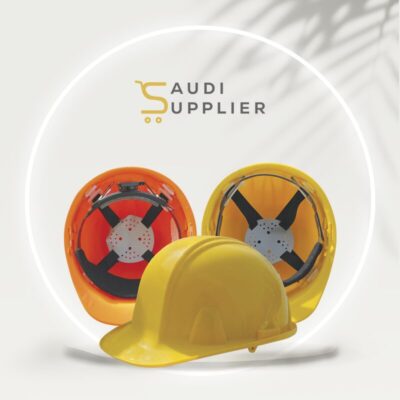
Store Safety Helmets Correctly
Safety helmets should be stored where they will not be crushed, scratched, contaminated, or exposed to excessive heat.
Good practices include:
- Keep helmets away from direct sunlight when not in use.
- Do not place heavy objects on top of helmets.
- Keep helmets away from chemicals.
- Inspect shells and suspension systems regularly.
- Follow the manufacturer’s replacement guidance.
- Do not modify helmets without authorization.
Helmets should not be stored under heavy equipment or in locations where they can easily fall onto hard surfaces.
Proper Storage of Safety Gloves
Different gloves are designed for different hazards, including mechanical risks, chemicals, heat, and electrical work.
Store gloves:
- In a clean and dry location
- Away from chemicals
- Away from excessive heat
- Protected from direct sunlight
- Separate from contaminated materials
Where gloves are reusable, they should be cleaned according to the manufacturer’s instructions before storage.
Do not place wet gloves into sealed containers for extended periods because trapped moisture can encourage deterioration or unpleasant odors.
Store Safety Footwear Correctly
Safety shoes and boots should be kept in a dry, ventilated storage area.
Good practices include:
- Allow wet footwear to dry appropriately.
- Keep footwear away from direct heat sources.
- Do not stack heavy objects on top of shoes.
- Store pairs together.
- Inspect soles, uppers, stitching, and protective components.
- Follow manufacturer cleaning recommendations.
Avoid using intense artificial heat to dry safety footwear because excessive heat can damage adhesives, materials, or protective components.
Protect Eye and Face Protection
Safety glasses, goggles, and face shields should be stored where their lenses will not become scratched.
Consider:
- Dedicated storage cases
- Protective pouches
- Clean cabinets
- Separate compartments
Avoid placing sharp tools or heavy equipment on top of eye protection.
Scratched or damaged lenses may reduce visibility and should be evaluated according to the manufacturer’s replacement guidance.
Proper Storage of Hearing Protection
Earplugs and earmuffs should be kept clean and protected from contamination.
Reusable hearing protection should be cleaned according to the manufacturer’s instructions.
For earmuffs:
- Store them away from excessive heat.
- Avoid crushing the cushions.
- Keep headbands from being unnecessarily deformed.
- Inspect cushions for damage.
Disposable hearing protection should remain in clean packaging until needed.
Store Fall Protection Equipment Carefully
Fall protection equipment requires particularly careful storage because damage may not always be obvious.
Harnesses, lanyards, connectors, and other components should be stored according to manufacturer instructions.
Keep fall protection equipment away from:
- Sharp edges
- Chemicals
- Oil and grease
- Excessive heat
- Direct sunlight
- Welding sparks
- Moisture
- Heavy equipment
Harnesses and lanyards should not be thrown into piles where they can become tangled or damaged.
Any fall protection equipment involved in a fall or showing signs of damage should be removed from service and evaluated according to the manufacturer’s procedures and applicable workplace requirements.
Respiratory Protection Requires Special Care
Respirators and related equipment need clean and controlled storage to prevent contamination and deformation.
Reusable respirators should be:
- Cleaned according to manufacturer instructions.
- Inspected for damage.
- Dried appropriately.
- Stored in a suitable protective container.
- Protected from dust, chemicals, and extreme temperatures.
Filters and cartridges should be managed according to their manufacturer’s storage and service-life requirements.
Create a PPE Inspection and Inventory System
Proper storage works best when combined with regular inspections.
A simple inventory system can track:
| Item | Quantity | Condition | Storage Location | Inspection Date |
|---|---|---|---|---|
| Safety helmets | 50 | Good | PPE Cabinet A | Monthly |
| Safety gloves | 100 pairs | Good | PPE Cabinet B | Monthly |
| Safety goggles | 40 | Good | PPE Cabinet C | Monthly |
| Safety harnesses | 15 | Good | Fall Protection Cabinet | Before use |
| Safety footwear | 30 pairs | Good | Footwear Rack | Monthly |
The exact inspection frequency should be based on the equipment, manufacturer instructions, workplace conditions, and risk assessment.
Apply First-In, First-Out Where Appropriate
For products with shelf-life considerations, a first-in, first-out approach can help prevent older inventory from remaining unused for too long.
When new safety equipment arrives:
- Check packaging.
- Record relevant information.
- Place newer stock behind older stock where appropriate.
- Rotate inventory.
- Monitor expiry or service-life information.
- Remove products that are no longer suitable for use.
However, shelf-life and expiry requirements vary by product. Always follow manufacturer guidance rather than assuming that every item can be stored indefinitely.
Keep Contaminated Equipment Separate
Safety equipment that has been exposed to chemicals, oils, biological contaminants, or other hazardous substances should not simply be returned to general storage.
Establish a clear process for:
- Removing contaminated PPE
- Cleaning reusable equipment where permitted
- Identifying equipment requiring inspection
- Disposing of equipment that cannot be safely reused
This reduces the risk of cross-contamination and helps protect workers handling stored equipment.
Train Employees on PPE Storage
A storage system will not work effectively if employees do not understand how to use it.
Training should explain:
- Where each type of PPE is stored
- How equipment should be returned
- How to identify damaged equipment
- When equipment should be reported
- Which products require cleaning
- What equipment must not be shared
- How to prevent contamination
Simple labels and visual instructions can make the system easier to follow.
Common Safety Equipment Storage Mistakes
Several common mistakes can reduce PPE effectiveness.
Storing PPE in Direct Sunlight
UV exposure can deteriorate certain materials over time.
Leaving Equipment on the Floor
Floor storage increases exposure to moisture, dirt, chemicals, and physical damage.
Mixing Clean and Contaminated PPE
This can spread contaminants and create unnecessary health and safety risks.
Ignoring Manufacturer Instructions
Generic storage practices may not be suitable for specialized equipment.
Overcrowding Storage Areas
Overcrowding can cause equipment to become crushed, deformed, difficult to inspect, or difficult to access.
Failing to Inspect Stored Equipment
Equipment can deteriorate even when it is not being actively used.
How Businesses Can Improve PPE Storage
A practical PPE storage program can follow these steps:
- Identify all safety equipment used by the organization.
- Review manufacturer storage requirements.
- Select suitable storage locations.
- Separate equipment by category.
- Label cabinets, shelves, and storage bins.
- Protect products from heat, moisture, sunlight, chemicals, and dust.
- Establish inspection procedures.
- Maintain inventory records.
- Train employees.
- Replace damaged or unsuitable equipment promptly.
This approach creates a more organized and reliable safety equipment management system.
Why Proper Storage Is Especially Important in Saudi Arabia
Industrial and commercial workplaces in Saudi Arabia may experience challenging environmental conditions.
Depending on the location, businesses may need to manage:
- High temperatures
- Dust and sand
- Humidity
- Coastal salt exposure
- Outdoor storage risks
- Frequent movement between job sites
For this reason, PPE should be stored in locations that provide appropriate protection from the environment.
Companies operating construction sites or remote facilities should pay particular attention to temporary storage arrangements and avoid leaving safety equipment exposed unnecessarily.
Choosing Quality Safety Equipment
Proper storage cannot compensate for poor-quality or unsuitable PPE. Businesses should first select equipment appropriate for the hazards identified through their workplace risk assessment.
Consider:
- Product specifications
- Intended application
- Relevant standards
- Worker requirements
- Manufacturer instructions
- Compatibility with other PPE
- Environmental conditions
- Replacement requirements
Businesses can explore Saudi Supplier for industrial products and safety-related supplies.
Conclusion
Proper safety equipment storage is an important part of an effective workplace safety program. Keeping PPE clean, dry, organized, protected from environmental conditions, and regularly inspected can help maintain its intended protective performance and reduce unnecessary replacement costs.
For businesses in Saudi Arabia, environmental conditions such as heat, dust, and humidity make appropriate storage even more important. By following manufacturer instructions, organizing storage areas, maintaining inventories, training employees, and removing damaged equipment from service, organizations can build a more reliable PPE management system.
Quality equipment, proper storage, regular inspection, and employee training should work together as part of a comprehensive approach to workplace safety.
Frequently Asked Questions
1. How should safety equipment be stored?
Safety equipment should generally be stored in a clean, dry, organized location protected from direct sunlight, excessive heat, moisture, chemicals, dust, and physical damage. Always follow the manufacturer’s specific storage instructions.
2. Can PPE be stored outside?
Outdoor storage is generally not ideal for many types of PPE because exposure to sunlight, heat, moisture, dust, and other environmental conditions can cause deterioration. If temporary outdoor storage is unavoidable, the equipment should be protected according to manufacturer requirements.
3. How should safety helmets be stored?
Safety helmets should be kept in a clean, dry area away from direct sunlight, excessive heat, chemicals, and heavy objects. They should not be crushed or stored underneath heavy equipment.
4. How often should stored safety equipment be inspected?
Inspection frequency depends on the type of equipment, manufacturer recommendations, workplace conditions, and risk assessment. Some equipment should be checked before each use, while inventory-level inspections may be scheduled periodically.
5. Should contaminated PPE be stored with clean equipment?
No. Contaminated PPE should be separated from clean equipment and handled according to the organization’s decontamination, inspection, and disposal procedures.
6. Does heat affect safety equipment?
Yes. Excessive heat can affect certain plastics, rubber components, adhesives, textiles, and other materials used in PPE. Safety equipment should be stored according to the manufacturer’s specified environmental conditions.
7. Why is PPE storage important in Saudi Arabia?
High temperatures, dust, sand, humidity, and harsh outdoor conditions can accelerate deterioration of some safety equipment. Appropriate indoor or protected storage helps reduce unnecessary environmental exposure.
Contact Saudi Supplier
Phone: +966565118011
Email: info@saudisupplier.com
Website: Saudi Supplier
Social Media
Threads: Saudi Supplier on Threads
Instagram: Saudi Supplier on Instagram
Facebook: Saudi Supplier on Facebook
X (Twitter): Saudi Supplier on X
