
































Importance of Using Branded Industrial Equipment
Industrial equipment plays a critical role in construction, manufacturing, maintenance, warehousing, fabrication, and other professional operations. From power tools and measuring instruments to safety equipment and material-handling products, businesses depend on reliable equipment to complete work efficiently and safely.
While purchasing decisions are often influenced by price, choosing equipment solely because it is inexpensive can create hidden costs. Frequent breakdowns, inconsistent performance, premature replacement, maintenance expenses, downtime, and safety concerns can make unreliable equipment more expensive over its working life.
This is where branded industrial equipment can offer an important advantage. Established manufacturers typically invest in product development, quality control, testing, documentation, and after-sales support. However, a recognized brand name alone does not guarantee that every product is suitable for every application. Businesses still need to evaluate specifications, certifications, compatibility, warranty conditions, and actual operating requirements.
For contractors, procurement teams, industrial companies, and workplace safety professionals in Saudi Arabia, a balanced approach to equipment selection can improve reliability while protecting long-term operational value.
What Is Branded Industrial Equipment?
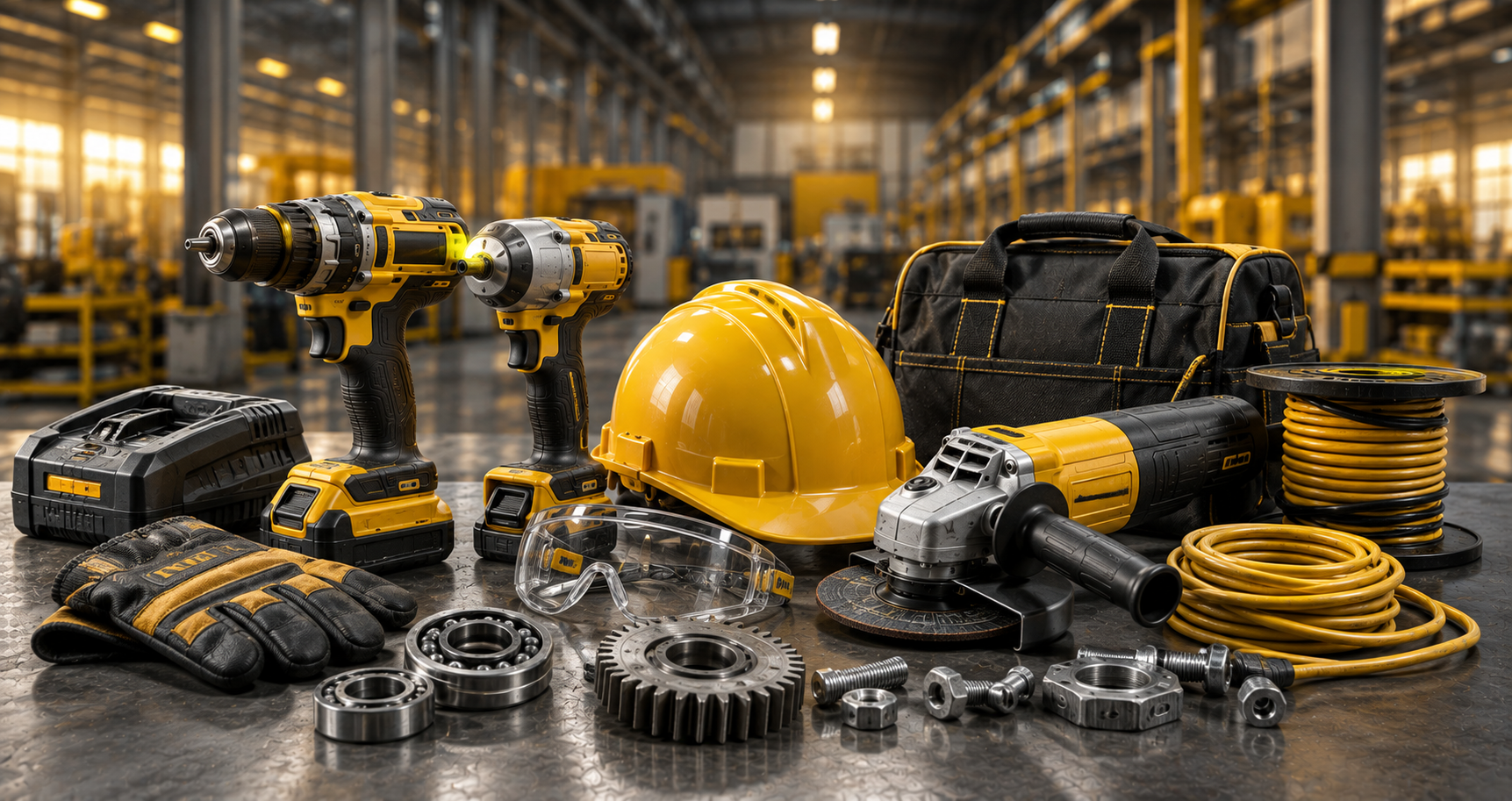
Branded industrial equipment refers to tools, machinery, safety products, and other professional equipment manufactured and sold under an established brand with defined product specifications and quality-control processes.
Examples include:
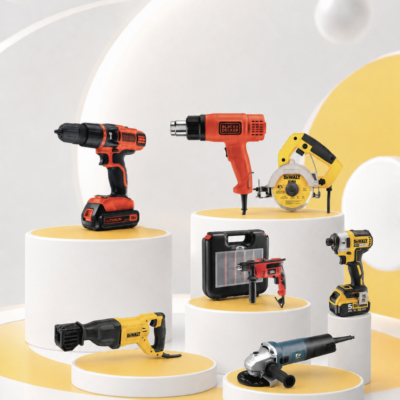
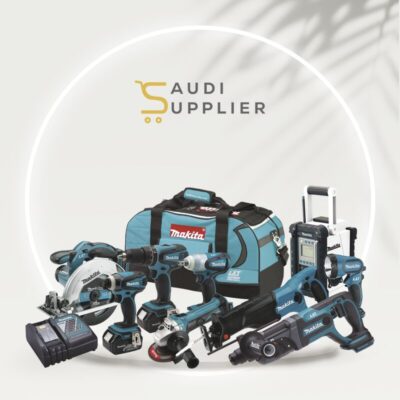
- Professional power tools
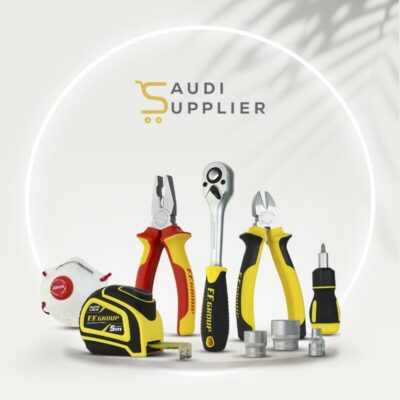
- Industrial hand tools
- Measuring instruments
- Electrical equipment
- Cutting and grinding tools
- Compressors
- Welding equipment
- Safety equipment
- Personal protective equipment
- Construction equipment
- Material-handling products
The key benefit is not simply the logo on the product. A reputable manufacturer should provide clear technical information, operating instructions, product identification, and appropriate support for the equipment.
Businesses can explore industrial products and professional equipment through Saudi Supplier.
Why Brand Reputation Matters in Industrial Procurement
In industrial environments, equipment failures can affect much more than one worker or one task.
A failed tool may cause:
- Production delays
- Missed project deadlines
- Additional labor costs
- Material waste
- Emergency replacement purchases
- Maintenance expenses
- Reduced customer confidence
Established manufacturers generally have greater incentives to maintain consistent product quality and protect their reputation.
That does not mean every branded product is automatically superior. Instead, brand reputation should be considered alongside technical performance, application suitability, and total cost of ownership.
1. Better Quality Control
One of the main reasons businesses consider branded industrial equipment is quality consistency.
Established manufacturers commonly operate formal quality-control processes covering materials, components, assembly, testing, and finished products.
Consistent manufacturing can help businesses reduce variations in:
- Tool performance
- Measurement accuracy
- Product durability
- Fit and compatibility
- Operating characteristics
For companies using equipment repeatedly across multiple worksites, consistency can be particularly valuable.
2. Greater Reliability During Professional Use
Industrial equipment often operates under demanding conditions.
Construction crews, manufacturing facilities, workshops, and maintenance teams may use tools for several hours each day. Equipment that is not designed for professional workloads may experience premature wear.
Branded professional equipment is often available in product ranges specifically designed for demanding applications.
When selecting equipment, however, buyers should check the manufacturer’s intended duty cycle and operating conditions rather than assuming that a product is suitable simply because it carries a recognized brand.
3. Longer Service Life Can Reduce Replacement Costs
The purchase price is only one part of equipment cost.
Consider two tools:
| Factor | Lower-Cost Equipment | Professional Branded Equipment |
|---|---|---|
| Initial price | Often lower | Often higher |
| Expected durability | May vary | Generally supported by product specifications |
| Replacement frequency | Potentially higher | Potentially lower |
| Spare parts | May be difficult to source | Often more structured |
| Warranty/support | May be limited | Usually documented |
| Long-term value | Depends on performance | Can be favorable for frequent use |
The correct choice depends on the application and product. A more expensive tool is worthwhile only when its performance, durability, support, or other benefits justify the additional investment.
4. Better Availability of Spare Parts
Industrial equipment eventually requires maintenance.
Parts such as:
- Batteries
- Chargers
- Filters
- Blades
- Brushes
- Seals
- Belts
- Accessories
- Replacement components
may need to be replaced during the equipment’s service life.
Established brands are more likely to maintain organized replacement-part systems for supported products. This can make equipment maintenance easier for businesses that depend on specific tools.
Before purchasing, procurement teams should confirm whether replacement parts and consumables are readily available in their market.
5. Access to Product Documentation
Professional equipment should come with appropriate documentation.
This may include:
- User manuals
- Technical specifications
- Maintenance instructions
- Safety warnings
- Installation instructions
- Product identification information
- Warranty documentation
Clear documentation helps employees understand how equipment should be operated and maintained.
For industrial businesses, documentation can also support internal training and equipment-management procedures.
6. Improved Workplace Safety
Equipment quality and workplace safety are closely connected.
Poorly manufactured or unsuitable equipment can increase the risk of:
- Mechanical failure
- Unexpected movement
- Electrical faults
- Broken components
- Loss of control
- Incorrect measurements
However, branded equipment should never be treated as a substitute for safety procedures.
Businesses should still conduct appropriate risk assessments, inspect equipment before use, train workers, and provide suitable PPE.
Companies can explore workplace protection products through Saudi Supplier Safety Equipment and Saudi Supplier PPE.
7. More Consistent Performance
Consistency is particularly important in manufacturing and professional contracting.
For example, a fabrication workshop may need tools to deliver repeatable cuts or measurements. A maintenance department may require torque equipment to achieve consistent fastening results.
When tools perform predictably, employees can follow established work procedures more consistently.
This can contribute to:
- Better product quality
- Less rework
- More predictable project schedules
- Improved material utilization
- Easier operator training
8. Professional Tools Can Improve Productivity
A quality tool can help workers complete tasks more efficiently when it is properly matched to the application.
Examples include:
- Cordless tools that reduce setup time
- Precision measuring equipment that reduces measurement errors
- High-quality cutting accessories that improve cutting consistency
- Professional fastening tools that improve installation efficiency
- Specialized equipment that reduces repetitive manual work
Businesses can review professional tools through the Saudi Supplier Tools category.
9. Better Warranty and After-Sales Support
Warranty and support can become important when equipment represents a significant business investment.
Before purchasing, companies should understand:
- Warranty duration
- What the warranty covers
- Exclusions
- Service arrangements
- Replacement procedures
- Availability of authorized service centers
- Spare-part availability
A product with a clear support structure can reduce uncertainty when something goes wrong.
However, buyers should verify the actual warranty terms for the specific product and seller rather than assuming that every item from a particular brand has identical coverage.
10. Easier Standardization Across Worksites
Companies operating multiple projects may benefit from standardizing commonly used equipment.
For example, a construction company may use the same professional tool platform across several sites.
Standardization can simplify:
- Employee training
- Battery management
- Accessory procurement
- Spare-parts inventory
- Maintenance
- Equipment transfers between sites
It can also help workers become familiar with the controls and operating procedures of commonly used equipment.
Standardization should still allow exceptions when a particular job requires specialized equipment.
Branded Equipment and Total Cost of Ownership
A major procurement mistake is comparing products only by their purchase price.
Total cost of ownership can include:
Purchase price + consumables + maintenance + repairs + downtime + replacement costs
For example, a cheaper tool that requires frequent replacement may ultimately cost more than a durable professional model used over several years.
Businesses should therefore calculate expected costs over the equipment’s useful life whenever practical.
Questions Procurement Teams Should Ask
Before purchasing, consider:
- How frequently will the equipment be used?
- What workload is it designed to handle?
- What materials will it work with?
- What maintenance does it require?
- Are spare parts available?
- How long is the warranty?
- Is technical support available?
- What consumables are required?
- Is it compatible with existing equipment?
- What is the expected total cost of ownership?
Choosing Branded Equipment for Different Industries
Different industries have different priorities.
| Industry | Important Equipment Considerations |
|---|---|
| Construction | Durability, portability, safety, battery life |
| Manufacturing | Precision, repeatability, productivity, serviceability |
| Warehousing | Reliability, ergonomics, ease of maintenance |
| Metal fabrication | Cutting performance, accuracy, tool life |
| Maintenance | Versatility, spare parts, portability |
| Electrical work | Accuracy, insulation, safety, testing capability |
| Plumbing | Durability, grip, compatibility, specialized functionality |
This approach prevents businesses from choosing equipment based solely on brand recognition.
How to Verify a Product Before Purchasing
A branded product should still be checked before procurement.
Check the Manufacturer
Confirm that the manufacturer provides legitimate product information and technical documentation.
Verify the Model
Record the exact model number and compare specifications.
Review Technical Requirements
Check:
- Voltage
- Power
- Dimensions
- Capacity
- Operating speed
- Load rating
- Material compatibility
- Environmental limitations
Confirm the Seller
Purchase through a reputable supplier and verify product authenticity, warranty terms, and support arrangements.
Review Certifications Where Applicable
For regulated or safety-critical products, confirm applicable standards and certification requirements for the intended use and market.
Avoid Choosing a Brand Without Considering the Application
A common mistake is assuming that the most famous brand is always the best choice.
A premium product can still be unsuitable if:
- It lacks the required capacity.
- It is incompatible with existing equipment.
- It is designed for a different material.
- Replacement parts are unavailable.
- Its specifications do not match the working environment.
The correct approach is brand + specification + application + support.
Importance of Genuine Products
Buying genuine products is just as important as selecting a reputable brand.
Counterfeit or unauthorized products may have:
- Incorrect specifications
- Inferior materials
- Poor-quality components
- Missing safety information
- Unreliable performance
- Invalid warranty coverage
Businesses should therefore maintain reliable procurement channels and verify product information when purchasing high-value or safety-critical equipment.
Combine Quality Equipment With Proper PPE
High-quality tools and machinery cannot eliminate workplace hazards by themselves.
Workers should use PPE appropriate to the task and risk assessment.
Depending on the operation, this may include:
- Safety footwear
- Eye protection
- Face shields
- Protective gloves
- Hearing protection
- High-visibility clothing
- Respiratory protection
- Fall-protection equipment
Businesses can review available protective equipment through the Saudi Supplier PPE category.
Maintenance Is Still Essential
Even premium equipment requires proper care.
A maintenance program should include:
- Pre-use inspections
- Cleaning
- Lubrication where required
- Battery care
- Accessory inspection
- Scheduled servicing
- Calibration where applicable
- Safe storage
- Replacement of worn components
Proper maintenance helps businesses obtain the value they expect from professional equipment.
Common Mistakes When Buying Industrial Equipment
Focusing Only on Price
The cheapest product may not provide the lowest long-term cost.
Assuming a Brand Guarantees Suitability
Every product must be evaluated according to the actual application.
Ignoring Spare Parts
A tool is less useful if critical replacement components are difficult to obtain.
Neglecting Employee Training
Even high-quality equipment can be used incorrectly without proper instruction.
Buying Too Much Capacity
Purchasing equipment far beyond actual requirements can unnecessarily increase capital costs.
Failing to Track Performance
Businesses should monitor equipment downtime, maintenance costs, replacement frequency, and productivity where practical.
Best Practices for Industrial Equipment Procurement
A practical procurement process can follow these steps:
- Identify the operational requirement.
- Define technical specifications.
- Compare suitable brands and models.
- Check compatibility.
- Evaluate total cost of ownership.
- Verify warranty and service support.
- Confirm genuine product availability.
- Consider employee training requirements.
- Test equipment where practical.
- Monitor performance after purchase.
Businesses looking for industrial and construction-related supplies can visit Saudi Supplier.
Conclusion
Using branded industrial equipment can provide important advantages for businesses that depend on reliable tools and machinery. Established manufacturers may offer more consistent quality, better documentation, organized spare-parts support, warranty options, and equipment designed for professional applications.
However, brand reputation should never replace proper procurement analysis. The best equipment is the product that meets the actual technical requirements of the job while providing suitable reliability, safety, serviceability, and long-term value.
For businesses in Saudi Arabia, a well-planned equipment strategy can reduce downtime, support employee productivity, improve consistency, and control long-term operating costs.
The most effective approach is to evaluate quality, specifications, application, authenticity, maintenance, support, and total cost of ownership together. When these factors are considered carefully, branded industrial equipment can become a valuable part of a reliable and efficient operation.
Frequently Asked Questions
1. Why is branded industrial equipment important?
Branded industrial equipment can offer consistent manufacturing quality, documented specifications, product support, replacement parts, warranty options, and designs intended for professional applications.
2. Is branded industrial equipment always better than unbranded equipment?
Not necessarily. The right choice depends on the product’s specifications, application, durability, safety requirements, warranty, support, and total cost of ownership. A brand name alone does not guarantee suitability.
3. Does branded equipment improve workplace safety?
Quality equipment can help reduce risks associated with poor manufacturing or unreliable performance. However, workplace safety also requires proper training, inspections, safe procedures, maintenance, and appropriate PPE.
4. Is branded industrial equipment worth the higher price?
It can be worthwhile when the equipment provides longer service life, better productivity, reliable support, or lower maintenance and replacement costs. Businesses should compare total cost of ownership rather than purchase price alone.
5. How can businesses identify genuine industrial equipment?
Businesses should purchase through reputable suppliers, verify the exact model and manufacturer information, review documentation, check packaging and product identification, and confirm warranty and support arrangements.
6. Why are spare parts important when buying industrial equipment?
Availability of genuine spare parts can make maintenance easier and extend the useful life of equipment. Before purchasing, businesses should check whether important replacement components and consumables are readily available.
7. How should companies choose industrial equipment brands?
Companies should begin with the application and technical requirements, then compare brands based on product quality, specifications, reliability, warranty, service support, spare parts, compatibility, and total cost of ownership.
Contact Saudi Supplier
Phone: +966565118011
Email: info@saudisupplier.com
Website: Saudi Supplier
Social Media
