






















































Best Cutting Tools for Industrial Use
Industrial cutting operations require more than simply choosing a sharp tool. The right cutting equipment must match the material, application, machine, operating conditions, and required finish. Using an unsuitable cutting tool can lead to slow production, poor-quality results, excessive material waste, premature tool wear, and unnecessary safety risks.
For manufacturing companies, metal fabricators, construction firms, maintenance contractors, workshops, and industrial businesses in Saudi Arabia, selecting the right cutting tools can directly affect productivity and operating costs.
Modern cutting solutions are available for metal, wood, concrete, plastic, pipes, composites, and other materials. The challenge is knowing which tool is appropriate for each job.
This guide explains the most useful industrial cutting tools, how to select them, and the best practices businesses should follow for efficient and safe operations.
Why Choosing the Right Cutting Tool Matters
A cutting tool is only effective when it is suited to the material and application.
For example, a blade designed for cutting steel may perform poorly when used on concrete, while a general-purpose saw may not provide the precision required for industrial fabrication.
The right tool can help businesses achieve:
- Faster cutting
- Better dimensional accuracy
- Cleaner edges
- Longer tool life
- Lower material waste
- Reduced downtime
- More consistent production
- Improved operator productivity
Therefore, procurement teams should evaluate cutting tools based on performance and suitability rather than purchasing solely according to price.
Businesses can explore professional equipment through Saudi Supplier.
Common Types of Industrial Cutting Tools
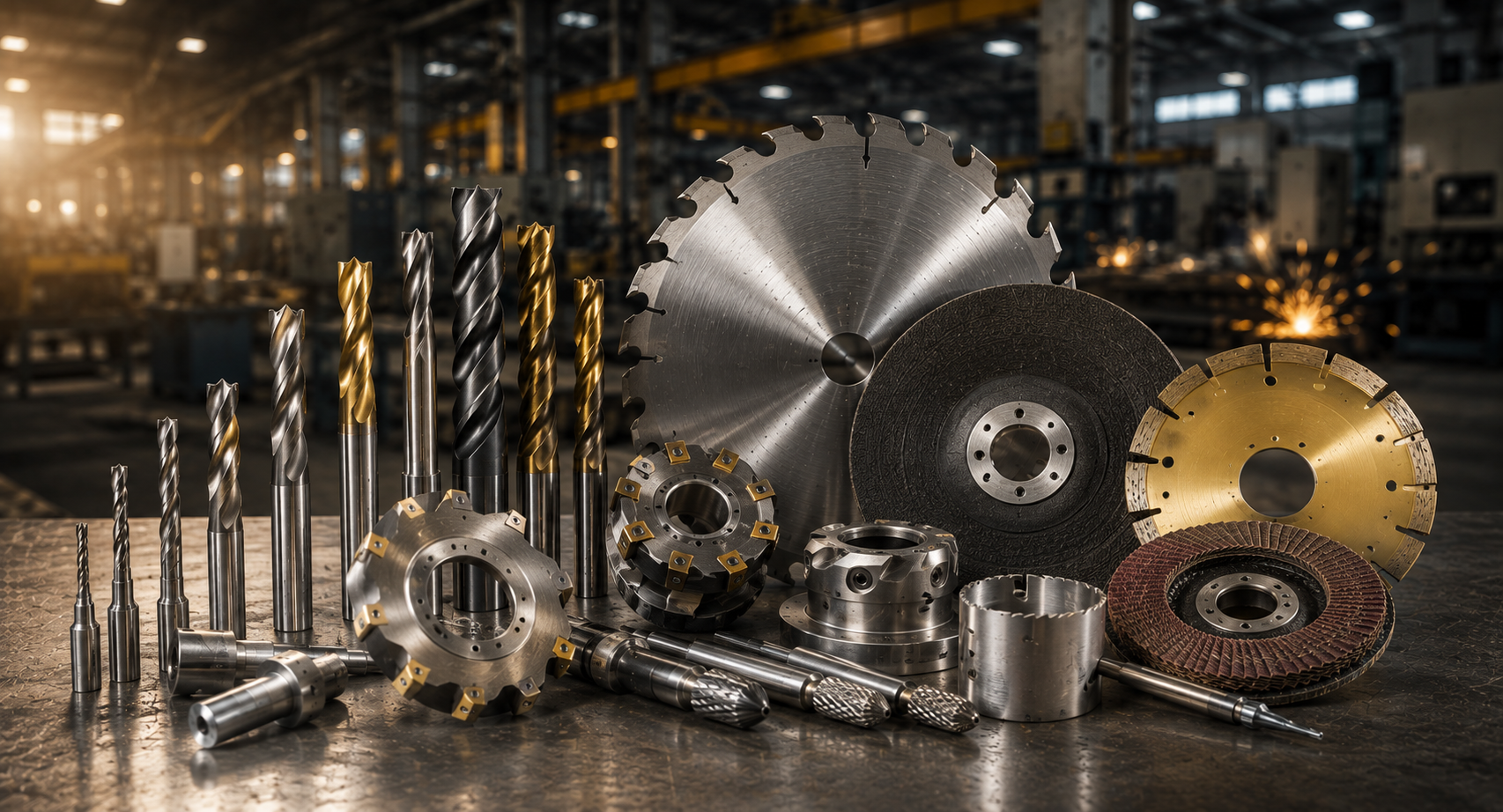
Different industries require different cutting solutions. The most commonly used options include cutting discs, circular saw blades, reciprocating saw blades, hole saws, band saws, diamond blades, and specialized machining cutters.
1. Cutting Discs
Cutting discs are widely used for metal fabrication, construction, maintenance, and installation work.
They are commonly used with angle grinders and other compatible machines to cut materials such as:
- Carbon steel
- Stainless steel
- Sheet metal
- Pipes
- Metal profiles
- Reinforcement materials
The disc must be selected according to the material, machine specifications, diameter, thickness, and maximum operating speed.
Thin cutting discs can provide fast and relatively clean cuts, while thicker products may be appropriate for applications requiring greater durability.
2. Circular Saw Blades
Circular saw blades are available for a wide range of industrial applications.
Depending on their design, they can be used for:
- Metal
- Wood
- Plastic
- Composite materials
- Construction materials
Tooth geometry plays an important role in performance. Different tooth configurations are designed for different materials and cutting requirements.
For repeated production work, selecting a blade designed specifically for the target material can improve consistency and reduce unnecessary blade replacement.
3. Reciprocating Saw Blades
Reciprocating saws are useful for maintenance, demolition, construction, and difficult-to-access cutting applications.
They can be particularly practical when workers need to cut:
- Pipes
- Metal sections
- Wood
- Plastic
- Mixed construction materials
The main advantage is flexibility. However, blade selection remains important because tooth configuration and material construction should correspond to the workpiece.
4. Band Saw Blades
Band saws are widely used in metalworking and fabrication environments where repeated, controlled cutting is required.
They can be suitable for cutting:
- Steel bars
- Pipes
- Tubing
- Structural sections
- Aluminum
- Other metal stock
Band saws can provide consistent cuts when properly configured, making them useful for workshops and manufacturing facilities handling repetitive material preparation.
5. Diamond Cutting Blades
Diamond blades are designed for demanding cutting applications involving hard materials.
They are commonly used for:
- Concrete
- Masonry
- Stone
- Tiles
- Asphalt
- Certain construction materials
Diamond cutting tools can provide efficient material removal, but the blade must be selected according to the material and machine.
For construction businesses, appropriate equipment can be sourced alongside other supplies through Saudi Supplier Construction Materials.
How to Choose the Right Industrial Cutting Tool
Choosing the correct tool starts with understanding the job.
Consider the Material
The first question should always be: What material are you cutting?
Metal, concrete, wood, plastic, and composite materials have different properties and therefore require different cutting solutions.
For metals, also consider whether the workpiece is:
- Mild steel
- Stainless steel
- Aluminum
- Cast iron
- Hardened steel
- Another alloy
Material hardness and thickness can significantly affect cutting performance.
Consider Material Thickness
A cutting tool suitable for thin sheet metal may not be appropriate for thick structural steel.
Before purchasing, determine:
- Material thickness
- Material dimensions
- Required cutting depth
- Expected cutting frequency
This helps prevent overloading the tool and reduces unnecessary wear.
Check Machine Compatibility
The cutting accessory must be compatible with the machine.
Important specifications may include:
- Blade or disc diameter
- Arbor or mounting size
- Maximum RPM
- Machine power
- Recommended operating conditions
- Accessory type
Never use a cutting accessory beyond the machine or accessory manufacturer’s specified limits.
Cutting Speed vs. Cutting Quality
Industrial cutting often involves a balance between speed and finish.
A very aggressive cutting approach may increase productivity but can also produce:
- Rough edges
- Excessive heat
- Burrs
- Distortion
- Premature tool wear
On the other hand, selecting a tool designed for precision may provide a cleaner result but require more time.
Businesses should therefore define the priority for each application:
High-volume production: prioritize consistent cutting speed and tool life.
Precision fabrication: prioritize accuracy and edge quality.
Construction work: prioritize suitable cutting performance, portability, and durability.
Carbide Cutting Tools for Precision Applications
Carbide cutting tools are widely used in machining because carbide can maintain cutting performance under demanding conditions.
They may be used for operations such as:
- Milling
- Turning
- Drilling
- Slotting
- Precision machining
Carbide tools can be particularly valuable in production environments where dimensional consistency and tool life are important.
However, carbide is not automatically the best choice for every operation. Tool geometry, coating, machine parameters, workpiece material, and cutting conditions must all be considered.
Abrasive Cutting Tools
Abrasive cutting products are commonly used where conventional toothed blades are unsuitable or where fast material removal is required.
They are frequently used for:
- Metal cutting
- Grinding-related applications
- Fabrication
- Construction
- Maintenance
When selecting abrasive products, consider the abrasive type, dimensions, intended material, operating speed, and application.
Businesses can also explore related professional equipment through the Saudi Supplier Tools category.
Cutting Tools for Metal Fabrication
Metal fabrication requires cutting tools capable of producing accurate and repeatable results.
Common options include:
| Application | Suitable Cutting Tool |
|---|---|
| Thin sheet metal | Cutting discs or specialized saw blades |
| Metal pipes | Band saws, reciprocating saws, or suitable discs |
| Structural steel | Band saws or appropriate industrial cutting systems |
| Stainless steel | Stainless-steel-rated cutting discs or suitable blades |
| Aluminum | Blades designed for non-ferrous metals |
| Hardened materials | Specialized carbide or application-specific tools |
The correct selection depends on the material grade, thickness, machine, production volume, and desired finish.
Cutting Tools for Construction Work
Construction sites often require portable cutting solutions.
Common applications include cutting:
- Rebar
- Pipes
- Metal profiles
- Concrete
- Masonry
- Timber
- Tiles
Portable tools can help crews work efficiently across large sites. However, site conditions should be considered when selecting equipment.
Dust, heat, outdoor exposure, and frequent transportation can place additional demands on tools.
Companies can review broader workplace and Safety Equipment requirements when planning cutting operations.
Improve Tool Life With Proper Maintenance
Even a high-quality cutting tool can wear quickly when it is poorly maintained or incorrectly operated.
Businesses can extend tool life by:
- Using the correct tool for the material.
- Following manufacturer operating specifications.
- Avoiding excessive force.
- Keeping cutting equipment clean.
- Inspecting blades and discs regularly.
- Replacing damaged accessories immediately.
- Storing tools in suitable conditions.
- Using appropriate cutting parameters for machining operations.
For powered equipment, regular inspection of cables, batteries, guards, switches, and other components is equally important.
Safety Practices for Industrial Cutting
Cutting operations can create serious hazards, including flying particles, sharp edges, sparks, noise, vibration, and dust.
Workers should follow the applicable workplace safety procedures and manufacturer instructions.
Essential Safety Measures
Before starting work:
- Inspect the tool and cutting accessory.
- Verify compatibility and operating speed.
- Check guards and protective components.
- Secure the workpiece.
- Keep bystanders away from the cutting area.
- Wear appropriate PPE.
- Ensure adequate ventilation where dust or fumes may be generated.
Depending on the application, PPE may include:
- Safety glasses or face protection
- Cut-resistant gloves where appropriate
- Hearing protection
- Safety footwear
- Protective clothing
- Respiratory protection where required by the risk assessment
For additional PPE requirements, businesses can review the Saudi Supplier PPE category.
Avoid These Common Cutting Tool Mistakes
Using the Wrong Blade
A blade designed for one material may perform poorly or become unsafe when used for another.
Exceeding the Rated Speed
Accessories should never be operated above their specified maximum speed.
Applying Excessive Pressure
Forcing a blade through the material can increase heat, vibration, and wear.
Ignoring Damaged Accessories
Cracked, excessively worn, distorted, or otherwise damaged cutting accessories should not be used.
Choosing Only on Price
A low-cost tool may appear economical but can become expensive if it has a short service life or produces excessive rework.
How Procurement Teams Can Reduce Cutting Costs
Industrial procurement should focus on total value rather than purchase price alone.
When comparing cutting tools, consider:
- Purchase cost
- Expected service life
- Cutting speed
- Material waste
- Replacement frequency
- Operator productivity
- Maintenance requirements
- Compatibility with existing machinery
- Availability of replacement products
For high-volume operations, even a small improvement in tool life can create substantial savings over time.
For example, if a fabrication team replaces cutting discs several times during a production shift, a more durable and application-specific product could reduce interruptions and improve workflow.
Build a Standard Cutting Tool Inventory
Companies that regularly perform cutting operations can benefit from a structured inventory.
Maintain separate stock categories for:
- Metal cutting accessories
- Concrete and masonry blades
- Wood-cutting blades
- Precision machining tools
- Abrasive products
- Replacement accessories
- PPE
Each item should ideally be labeled according to its intended application.
This reduces the likelihood of workers selecting an unsuitable product simply because it is readily available.
Best Practices for Industrial Cutting Efficiency
For consistent results, businesses should:
- Match the cutting tool to the material.
- Confirm machine compatibility.
- Use appropriate operating parameters.
- Secure workpieces properly.
- Avoid forcing the tool.
- Inspect accessories before use.
- Replace worn products promptly.
- Train operators.
- Maintain an organized inventory.
- Track tool performance and replacement rates.
These practices can help improve productivity while supporting a safer working environment.
Conclusion
The best cutting tool for industrial use is not necessarily the most expensive or technologically advanced option. It is the tool that matches the material, machine, cutting method, production requirements, and desired result.
Cutting discs, circular saw blades, reciprocating saw blades, band saw blades, diamond blades, carbide cutters, and other specialized products each have their place in industrial operations.
For businesses in Saudi Arabia, careful tool selection can improve cutting speed, accuracy, tool life, material utilization, and overall productivity. At the same time, proper maintenance, operator training, PPE, and safe operating practices are essential for achieving consistent results.
Whether you operate a fabrication workshop, construction company, manufacturing facility, maintenance department, or industrial project, investing in the right cutting equipment can make everyday operations more efficient and reliable.
Frequently Asked Questions
1. What are the best cutting tools for industrial use?
The best cutting tool depends on the application. Common options include cutting discs, circular saw blades, band saw blades, reciprocating saw blades, diamond blades, and carbide cutting tools.
2. How do I choose a cutting tool for metal?
Consider the type and thickness of the metal, required cutting speed, desired finish, machine compatibility, and frequency of use. Stainless steel, aluminum, mild steel, and hardened materials may require different cutting products.
3. Are diamond blades suitable for metal cutting?
Diamond blades are primarily associated with hard construction materials such as concrete, masonry, stone, and asphalt. Metal-cutting applications generally require accessories specifically designed and rated for the particular metal and machine.
4. How can I extend the life of industrial cutting tools?
Use the correct tool for the material, follow operating specifications, avoid excessive pressure, inspect accessories regularly, maintain the equipment, and replace damaged or excessively worn cutting products.
5. What safety equipment is required when using cutting tools?
Depending on the task and risk assessment, workers may require eye or face protection, suitable gloves, hearing protection, safety footwear, protective clothing, and respiratory protection.
6. Why is machine compatibility important for cutting tools?
Cutting accessories must match the machine’s dimensions, mounting system, operating speed, and intended application. Incorrect compatibility can reduce performance and create serious safety risks.
7. Are expensive cutting tools always better?
Not necessarily. The best product is one that provides suitable performance, durability, safety, and value for the specific application. Total cost of ownership is more useful than purchase price alone.
Contact Saudi Supplier
Phone: +966565118011
Email: info@saudisupplier.com
Website: Saudi Supplier
Social Media
