




































How to Improve Efficiency with Modern Tools
Efficiency is a major priority for businesses operating in construction, manufacturing, maintenance, fabrication, warehousing, and other industrial sectors. Companies are expected to complete projects faster, maintain consistent quality, control operating costs, and keep workers safe. One of the most practical ways to support these goals is by replacing outdated equipment and manual processes with modern, purpose-built tools.
Modern tools do more than make individual tasks easier. When selected correctly, they can improve accuracy, reduce physical effort, minimize downtime, speed up repetitive work, and help teams achieve more consistent results.
For contractors, industrial companies, procurement professionals, workshops, and maintenance teams in Saudi Arabia, investing in the right tools can provide measurable operational benefits. However, efficiency does not come simply from purchasing newer equipment. Businesses need to select tools according to their actual applications, train employees properly, maintain equipment, and measure whether the investment is delivering results.
This guide explains how modern tools can improve workplace efficiency and what businesses should consider when upgrading their equipment.

What Are Modern Industrial Tools?
Modern industrial tools include improved versions of traditional hand tools as well as powered, digital, battery-operated, and specialized equipment designed to make work faster and more precise.
Examples include:
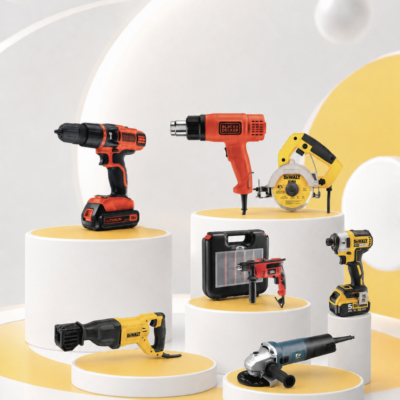
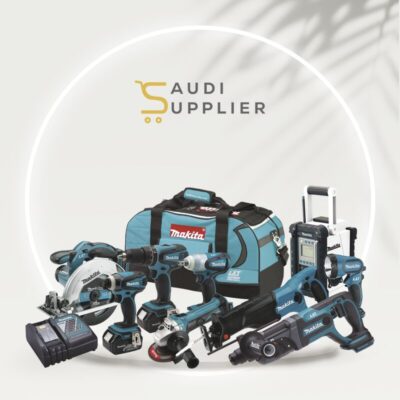
- Cordless power tools
- Digital measuring instruments
- Laser distance meters
- Electric and pneumatic tools
- Modern cutting and grinding equipment
- Torque-controlled tools
- Automated or semi-automated equipment
- Advanced inspection instruments
- Battery-powered material-handling tools
- Specialized construction equipment
The right tool depends on the application. A digital measuring device may improve precision in fabrication, while a cordless drill may improve mobility for construction and maintenance teams.
Businesses can explore industrial tools and equipment through Saudi Supplier.
Why Modern Tools Improve Workplace Efficiency
Traditional methods are not necessarily ineffective, but they may require more time, physical effort, or manual repetition.
Modern tools can improve efficiency by helping workers:
- Complete tasks faster
- Reduce unnecessary movement
- Improve measurement accuracy
- Reduce rework
- Perform repetitive tasks more consistently
- Access difficult areas
- Reduce manual strain
- Improve jobsite mobility
- Complete multiple tasks with fewer tool changes
For example, replacing a manual measurement process with an appropriate digital measuring instrument can reduce the time needed to record dimensions, particularly when multiple measurements are required.
1. Use Cordless Tools for Greater Mobility
Cordless tools have become increasingly useful for construction, maintenance, installation, and repair work.
Cordless drills, impact drivers, grinders, saws, and other equipment can reduce dependence on extension cables and fixed power sources.
Benefits of Cordless Tools
They can provide:
- Greater mobility
- Faster setup
- Easier access to confined areas
- Reduced cable management
- Convenient use across large worksites
However, procurement teams should consider battery compatibility, charging time, runtime, replacement battery costs, and availability of spare batteries.
For companies using multiple cordless tools, selecting a compatible battery platform can simplify inventory management.
2. Improve Accuracy With Digital Measuring Tools
Measurement errors can create rework, wasted materials, and installation problems.
Modern measuring tools such as digital calipers, laser distance meters, digital levels, and electronic gauges can help workers obtain and record measurements efficiently.
They are particularly useful for:
- Construction
- Fabrication
- Mechanical maintenance
- Equipment installation
- Quality control
- Warehouse planning
However, digital does not automatically mean accurate. Tools should still be selected according to their specifications, properly maintained, and calibrated or verified where required.
Businesses can explore professional tools through Saudi Supplier Tools.
3. Choose Tools That Reduce Repetitive Work
Repetitive manual tasks can consume significant amounts of time.
Where appropriate, businesses can introduce powered or specialized tools for:
- Drilling
- Fastening
- Cutting
- Grinding
- Sanding
- Polishing
- Cleaning
- Material handling
The objective is not simply to automate everything. Instead, companies should identify repetitive tasks where a modern tool can provide a clear productivity advantage without compromising safety or quality.
4. Improve Productivity With Specialized Tools
General-purpose tools are useful, but specialized equipment can sometimes perform specific tasks more efficiently.
For example, a professional contractor may benefit from specialized:
- Pipe tools
- Electrical testing equipment
- Plumbing tools
- Concrete cutting equipment
- Welding accessories
- Torque tools
- Inspection instruments
A specialized tool can reduce setup time and improve consistency when the same operation is performed frequently.
Saudi Supplier provides access to tools and other industrial supplies for businesses seeking equipment suited to professional applications.
5. Use the Right Abrasive Tools
Cutting and grinding tasks can become inefficient when workers use unsuitable abrasive products.
The correct cutting disc, grinding wheel, flap disc, or diamond blade can improve:
- Cutting speed
- Surface finish
- Material removal
- Tool life
- Operator productivity
The abrasive must always be matched to the material and machine. For example, products designed for metal should not automatically be used for concrete or masonry.
Using the wrong abrasive can increase wear and potentially create safety hazards.
6. Improve Workplace Safety With Better Equipment
Efficiency and safety should not be treated as competing priorities.
Unsafe equipment, damaged tools, and inadequate PPE can result in injuries, downtime, investigations, and project delays.
Businesses should therefore provide workers with appropriate equipment and PPE for the hazards associated with their tasks.
Depending on the workplace, this may include:
- Safety helmets
- Protective eyewear
- Gloves
- Safety footwear
- Hearing protection
- High-visibility clothing
- Fall protection
- Respiratory protection
Companies can review available options through Saudi Supplier Safety Equipment and Saudi Supplier PPE.
7. Reduce Downtime Through Reliable Tools
A tool that repeatedly fails can cost more than its purchase price.
Downtime can involve:
- Waiting for repairs
- Finding replacement equipment
- Delayed production
- Reassigning employees
- Missing project deadlines
When comparing tools, procurement teams should look beyond the initial price and evaluate the total cost of ownership.
Consider:
- Expected service life
- Maintenance requirements
- Replacement parts
- Warranty coverage
- Battery costs
- Consumables
- Availability of technical support
A durable tool with reliable service support may provide better long-term value than a cheaper alternative.
8. Standardize Tools Across Teams
Standardization can make industrial operations more efficient.
If every department uses completely different tool models, businesses may need to maintain multiple types of:
- Batteries
- Chargers
- Accessories
- Replacement parts
- Consumables
- Training materials
Where practical, standardizing frequently used tools can simplify procurement and maintenance.
For example, a company using several cordless tools may benefit from selecting models that share the same battery system.
Standardization should not override technical requirements, but it can reduce unnecessary complexity.
9. Train Employees to Use Modern Tools Properly
A sophisticated tool cannot improve productivity if employees do not know how to use it correctly.
Training should cover:
- Correct operation
- Safety procedures
- Tool limitations
- Accessories
- Maintenance
- Battery handling
- Inspection requirements
- Emergency procedures
Employees should understand not only how to operate the tool but also when it should not be used.
For new equipment, short practical demonstrations can be particularly effective.
10. Maintain Tools Regularly
Poorly maintained equipment can become less efficient and more likely to fail.
A maintenance program should include:
- Pre-use inspections
- Cleaning
- Lubrication where required
- Battery checks
- Cable inspections
- Accessory replacement
- Calibration where applicable
- Scheduled servicing
- Proper storage
- Maintenance records
Small maintenance tasks can prevent larger equipment problems.
Choosing Modern Tools for Different Industries
The best tool depends on the nature of the operation.
| Industry | Useful Modern Tools |
|---|---|
| Construction | Cordless drills, laser levels, laser distance meters, power saws |
| Manufacturing | Precision measuring tools, torque tools, powered equipment |
| Maintenance | Cordless tools, inspection instruments, specialized repair tools |
| Warehousing | Barcode equipment, measuring tools, material-handling equipment |
| Metal fabrication | Grinders, cutting tools, welding accessories, digital measuring tools |
| Plumbing | Pipe tools, inspection equipment, powered cutting and fastening tools |
| Electrical work | Testing instruments, cordless tools, cable preparation equipment |
This is general guidance. Businesses should select tools according to their specific applications, safety requirements, and operating environment.
How to Calculate Whether a New Tool Is Worth Buying
Businesses can evaluate a potential tool investment by comparing its cost against expected productivity improvements.
For example, consider a task that currently requires two workers for four hours each week.
If a modern tool allows the same task to be completed in two hours by one worker, the company can estimate the labor time saved over a month or year.
Also consider:
- Reduced rework
- Lower consumable usage
- Reduced equipment downtime
- Fewer maintenance interruptions
- Improved production capacity
- Better product quality
The goal is to evaluate the total business impact rather than focusing only on the purchase price.
Avoid Buying Modern Tools Simply Because They Are New
New technology can be useful, but newer does not always mean better for every application.
Before purchasing, ask:
- What problem will this tool solve?
- How often will it be used?
- Is it compatible with existing equipment?
- Does it improve speed or accuracy?
- Can employees operate it safely?
- Are spare parts available?
- What maintenance does it require?
- What is the expected service life?
- What is the total cost of ownership?
- Can the productivity improvement be measured?
This approach helps prevent unnecessary purchases and keeps procurement focused on business value.
Consider Construction and Site Conditions in Saudi Arabia
Industrial and construction operations in Saudi Arabia can involve demanding working conditions, including dust, high temperatures, outdoor exposure, and large worksites.
When selecting tools, businesses should therefore consider:
- Tool durability
- Dust exposure
- Battery performance
- Storage conditions
- Protection from environmental factors
- Availability of replacement parts
- Ease of transport
- Operator comfort
Tools intended for frequent outdoor use should be selected according to the manufacturer’s environmental and operating specifications.
Combine Modern Tools With Proper PPE
Modern tools can improve productivity, but they may also introduce hazards such as noise, flying particles, vibration, sharp edges, dust, and sparks.
Workers should use appropriate PPE based on the task and workplace risk assessment.
For construction-related projects, businesses can also explore Saudi Supplier Construction Materials and related industrial supplies.
Create a Modern Tool Management System
Larger businesses can improve efficiency by managing tools systematically.
A practical tool management system can include:
- Tool inventory records
- Assigned equipment
- Inspection schedules
- Maintenance dates
- Replacement schedules
- Battery tracking
- Calibration records
- Operator training records
Tool management becomes particularly important when equipment is shared between multiple teams or worksites.
A basic inventory system can help businesses identify which tools are being used frequently and which equipment is rarely used.
Common Mistakes When Upgrading Industrial Tools
Choosing the Cheapest Option
Low purchase cost does not necessarily mean low total cost.
Ignoring Compatibility
New tools should work with existing equipment, accessories, power systems, and work processes where appropriate.
Buying Without User Input
Workers who actually perform the task often understand practical requirements that may not be obvious during procurement.
Neglecting Training
Employees need adequate instruction before using unfamiliar equipment.
Failing to Measure Results
If businesses do not track productivity before and after an upgrade, it becomes difficult to determine whether the investment delivered value.
A Practical Checklist for Buying Modern Tools
Before purchasing new equipment, procurement teams can review the following:
- Identify the specific productivity problem.
- Determine the required tool type.
- Compare available models.
- Check technical specifications.
- Confirm compatibility.
- Review safety requirements.
- Consider operator training.
- Check spare parts availability.
- Estimate maintenance costs.
- Calculate total cost of ownership.
- Test the tool where practical.
- Measure productivity after implementation.
Businesses looking for professional equipment and industrial supplies can visit Saudi Supplier.
Conclusion
Modern tools can make a significant difference in construction, manufacturing, maintenance, fabrication, and other industrial operations. Cordless equipment can improve mobility, digital measuring tools can support accuracy, specialized equipment can reduce repetitive work, and reliable professional tools can help minimize downtime.
However, successful tool modernization requires more than purchasing new equipment. Businesses should identify genuine operational problems, select tools according to the application, train employees, maintain equipment, and measure the results.
For companies in Saudi Arabia, the best investment is not necessarily the newest or most expensive tool. It is the equipment that provides a practical improvement in productivity, quality, safety, reliability, or operating cost.
By combining modern tools with effective training, maintenance, PPE, and organized procurement, businesses can create more efficient and dependable workplaces.
Frequently Asked Questions
1. How can modern tools improve workplace efficiency?
Modern tools can reduce manual effort, speed up repetitive tasks, improve measurement accuracy, reduce rework, increase mobility, and minimize equipment downtime when properly selected and used.
2. Are cordless tools more efficient than corded tools?
Cordless tools can provide greater mobility and faster setup, particularly on construction sites and maintenance jobs. However, corded equipment may be more suitable for continuous operation where reliable electrical power is available.
3. What modern tools are useful for construction companies?
Construction companies may benefit from cordless drills, impact drivers, laser distance meters, laser levels, modern cutting tools, power saws, specialized hand tools, and appropriate safety equipment.
4. How should businesses choose modern industrial tools?
Businesses should consider the application, productivity requirements, technical specifications, compatibility, safety, durability, maintenance, spare parts, operator training, and total cost of ownership.
5. Can modern tools reduce workplace accidents?
Appropriate tools can help reduce certain risks by improving control, reducing excessive manual effort, and making tasks more consistent. However, tools alone cannot prevent accidents. Proper training, safe procedures, equipment inspection, and PPE remain essential.
6. Why is tool maintenance important for efficiency?
Regular maintenance helps keep tools operating properly, reduces unexpected failures, extends service life, and can prevent productivity losses caused by equipment downtime.
7. Should companies standardize their industrial tools?
Where practical, standardization can simplify training, spare-parts management, battery systems, maintenance, and procurement. However, technical requirements should always take priority over standardization.
Contact Saudi Supplier
Phone: +966565118011
Email: info@saudisupplier.com
Website: Saudi Supplier
