
No products in the cart.
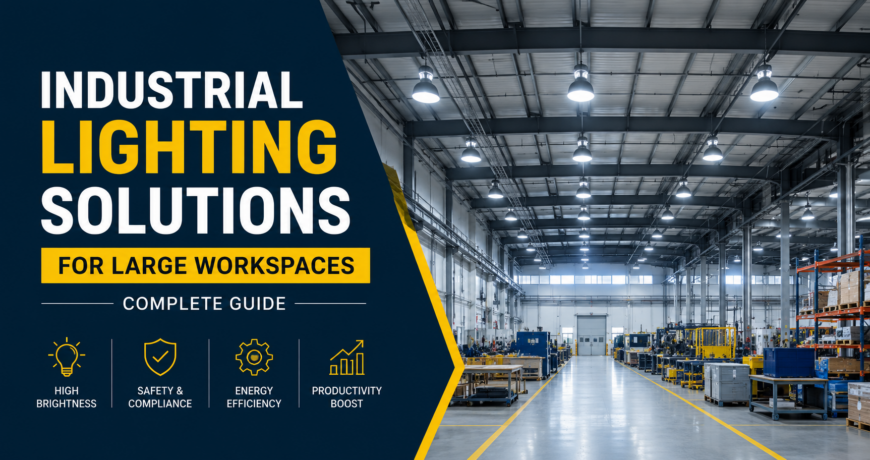
Industrial Lighting Solutions for Large Workspaces | Complete Guide
Proper lighting is one of the most important yet often overlooked components of an efficient industrial facility. Whether operating a warehouse, manufacturing plant, logistics center, construction site, distribution hub, or large commercial workspace, the quality of lighting directly impacts safety, productivity, energy consumption, and operational efficiency.
In large industrial environments, poor lighting can lead to workplace accidents, employee fatigue, reduced visibility, and costly operational inefficiencies. On the other hand, well-designed industrial lighting solutions improve worker performance, enhance safety compliance, reduce maintenance costs, and support long-term business growth.
As Saudi Arabia continues to expand its industrial, logistics, and infrastructure sectors under Vision 2030, investing in advanced industrial lighting systems has become a strategic priority for businesses seeking to optimize workplace performance.
This guide explores industrial lighting solutions for large workspaces, including lighting types, key considerations, benefits, best practices, and recommendations for industrial facilities across Saudi Arabia.
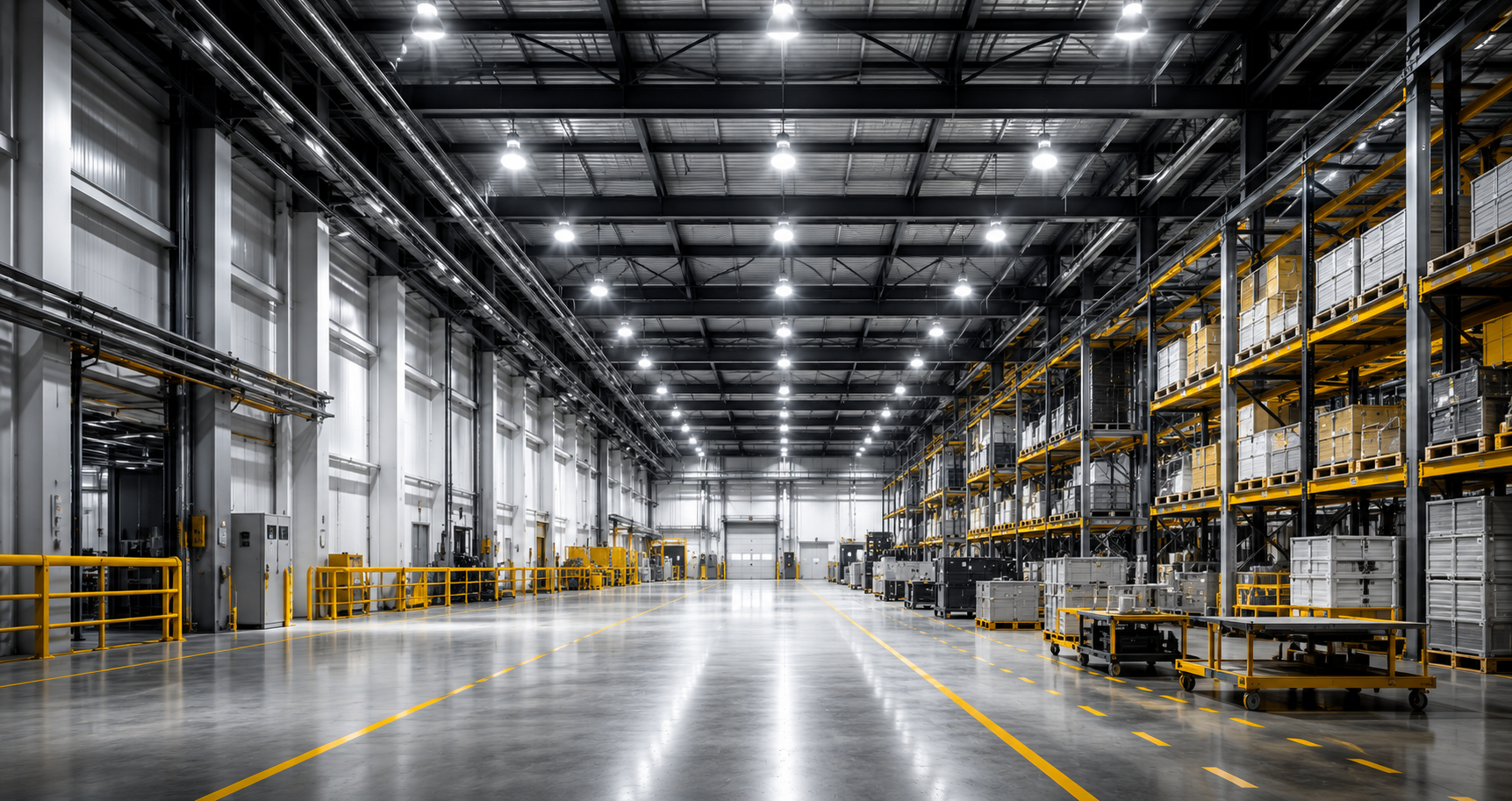
Why Industrial Lighting Matters
Lighting does much more than illuminate a workspace. It directly influences worker safety, operational efficiency, and overall facility performance.
Key Benefits of Proper Industrial Lighting
- Improved workplace safety
- Enhanced employee productivity
- Better visibility for equipment operation
- Reduced workplace accidents
- Lower energy costs
- Increased equipment lifespan
- Improved quality control processes
- Better employee comfort and morale
For businesses managing large industrial environments, lighting should be viewed as a long-term investment rather than a simple utility expense.
Common Challenges in Large Industrial Workspaces
Large facilities often present unique lighting challenges that standard commercial lighting systems cannot adequately address.
Typical Industrial Lighting Challenges
| Challenge | Impact |
|---|---|
| High Ceilings | Reduced light effectiveness |
| Large Floor Areas | Uneven illumination |
| Dust and Debris | Reduced fixture performance |
| Extreme Temperatures | Shortened equipment lifespan |
| Continuous Operations | Increased energy consumption |
| Maintenance Access | Difficult fixture replacement |
| Safety Requirements | Higher illumination standards |
Understanding these challenges helps facility managers select the most effective lighting solutions.
Types of Industrial Lighting Solutions
Different industrial applications require different lighting systems depending on workspace size, operational requirements, and environmental conditions.
LED High Bay Lighting
LED high bay lights are among the most popular solutions for large industrial facilities.
These fixtures are specifically designed for:
- Warehouses
- Manufacturing plants
- Distribution centers
- Logistics hubs
- Aircraft hangars
Advantages of LED High Bay Lighting
- Excellent energy efficiency
- Long operational lifespan
- Low maintenance requirements
- High lumen output
- Improved visibility
- Reduced heat generation
LED high bays provide consistent illumination even in facilities with ceilings exceeding 20 feet.
Low Bay Lighting
Low bay fixtures are suitable for industrial spaces with lower ceiling heights.
Common Applications
- Workshops
- Assembly areas
- Maintenance facilities
- Storage rooms
These fixtures deliver focused illumination while minimizing glare and energy consumption.
Flood Lighting
Industrial floodlights are commonly used for outdoor applications.
Best Uses
- Construction sites
- Equipment yards
- Loading docks
- Parking areas
- Perimeter security zones
Modern LED floodlights provide powerful illumination while significantly reducing electricity costs.
Task Lighting
Some industrial activities require enhanced lighting for detailed work.
Examples include:
- Quality inspections
- Precision manufacturing
- Equipment maintenance
- Laboratory operations
Task lighting supplements general illumination and improves visibility in critical work areas.
Emergency Lighting Systems
Emergency lighting is a critical safety requirement for industrial facilities.
Functions of Emergency Lighting
- Illuminates evacuation routes
- Supports emergency response efforts
- Maintains visibility during power failures
- Improves worker safety during emergencies
Proper emergency lighting systems are essential for regulatory compliance and risk management.
Why LED Technology Dominates Industrial Lighting
Traditional lighting technologies such as metal halide and fluorescent systems are increasingly being replaced by LED solutions.
Comparison of Lighting Technologies
| Feature | LED Lighting | Traditional Lighting |
|---|---|---|
| Energy Efficiency | Excellent | Moderate |
| Lifespan | Very Long | Shorter |
| Maintenance | Minimal | Frequent |
| Heat Output | Low | High |
| Brightness | Consistent | Gradually Declines |
| Environmental Impact | Lower | Higher |
The long-term operational savings often make LED systems the preferred choice for industrial facilities.
Key Factors to Consider When Selecting Industrial Lighting
Choosing the right lighting solution requires careful planning and assessment.
Facility Size and Layout
Large warehouses and production facilities require lighting systems designed to provide consistent illumination across extensive floor areas.
Consider:
- Ceiling height
- Building dimensions
- Equipment placement
- Storage rack configurations
- Workflow patterns
A professional lighting assessment helps optimize fixture placement.
Brightness Requirements
Different industrial activities require varying illumination levels.
Examples include:
- Warehousing operations
- Manufacturing processes
- Inspection stations
- Loading areas
- Administrative workspaces
Higher precision tasks generally require greater light intensity.
Energy Efficiency Goals
Energy costs represent a significant operational expense for large facilities.
Energy-efficient lighting systems help businesses:
- Reduce utility bills
- Improve sustainability
- Lower carbon emissions
- Enhance operational profitability
LED technology often delivers the highest return on investment.
Environmental Conditions
Industrial facilities may experience:
- Dust
- Moisture
- Chemicals
- High temperatures
- Vibration
Lighting fixtures should be selected based on environmental demands to ensure long-term performance.
Industrial Lighting and Workplace Safety
Lighting plays a direct role in accident prevention.
Safety Risks Associated with Poor Lighting
Inadequate lighting can contribute to:
- Slip and fall incidents
- Equipment collisions
- Material handling accidents
- Operator errors
- Reduced hazard visibility
Well-lit environments help workers identify risks before accidents occur.
Supporting PPE and Safety Programs
Effective lighting enhances visibility of safety signage, PPE requirements, and workplace hazards.
Companies investing in workplace safety can complement lighting improvements with products from:
https://saudisupplier.com/product-category/safety-equipment/
and
https://saudisupplier.com/product-category/ppe/
Combining proper lighting with quality personal protective equipment creates a safer work environment.
Best Practices for Industrial Lighting Installation
A successful lighting system requires more than selecting quality fixtures.
Conduct a Lighting Audit
Before upgrading or installing lighting systems:
- Assess current illumination levels.
- Identify dark spots.
- Evaluate energy consumption.
- Review safety concerns.
- Analyze workflow requirements.
A lighting audit provides valuable insights for decision-making.
Optimize Fixture Placement
Strategic fixture placement helps:
- Eliminate shadows
- Reduce glare
- Improve visibility
- Enhance workspace efficiency
Proper spacing ensures consistent illumination throughout the facility.
Incorporate Smart Lighting Controls
Modern industrial facilities increasingly use:
- Motion sensors
- Occupancy sensors
- Daylight harvesting systems
- Automated scheduling controls
These technologies improve efficiency while reducing unnecessary energy consumption.
Plan for Future Expansion
Businesses should select scalable lighting systems capable of supporting future facility growth and operational changes.
Forward-thinking planning reduces future upgrade costs.
Maintenance Tips for Industrial Lighting Systems
Regular maintenance ensures lighting systems perform at optimal levels.
Recommended Maintenance Practices
- Clean fixtures regularly
- Inspect wiring and connections
- Replace damaged components promptly
- Monitor light output levels
- Test emergency lighting systems
- Schedule preventive inspections
Preventive maintenance extends fixture lifespan and minimizes operational disruptions.
Signs Your Lighting System Needs Upgrading
Consider upgrades if you notice:
- Frequent bulb failures
- High energy bills
- Uneven illumination
- Excessive maintenance costs
- Reduced visibility
Modern LED solutions often provide immediate operational benefits.
Industrial Lighting Trends in Saudi Arabia
Industrial facilities throughout Saudi Arabia are increasingly adopting advanced lighting technologies to improve efficiency and sustainability.
Emerging Trends
Smart Industrial Lighting
Connected systems enable real-time monitoring and automated control.
Energy-Efficient LED Retrofits
Many facilities are replacing outdated lighting systems with LED alternatives.
Sustainability Initiatives
Businesses are prioritizing environmentally responsible solutions that align with corporate sustainability goals.
Integrated Facility Management
Lighting systems are increasingly integrated with broader building management platforms for improved operational control.
These trends support the modernization of industrial operations throughout the Kingdom.
Supporting Industrial Operations with Quality Products
Efficient industrial environments require more than lighting alone. Businesses must combine quality infrastructure, safety equipment, and operational tools to maximize productivity.
Saudi Supplier supports industrial organizations across Saudi Arabia through a comprehensive range of products and workplace solutions.
Explore available categories:
- https://saudisupplier.com/
- https://saudisupplier.com/product-category/safety-equipment/
- https://saudisupplier.com/product-category/ppe/
- https://saudisupplier.com/product-category/tools/
- https://saudisupplier.com/product-category/construction-materials/
With the right combination of lighting, safety equipment, and operational resources, businesses can create productive, efficient, and safer workplaces.
Frequently Asked Questions (FAQs)
1. What is the best lighting solution for large industrial workspaces?
LED high bay lighting is often considered the best solution for warehouses, manufacturing plants, and large industrial facilities due to its efficiency, brightness, and long lifespan.
2. Why is industrial lighting important for workplace safety?
Proper lighting improves visibility, helps identify hazards, reduces accidents, and supports safer equipment operation throughout industrial environments.
3. How can industrial lighting reduce energy costs?
Modern LED systems consume significantly less electricity than traditional lighting technologies while delivering equal or better illumination.
4. What factors should businesses consider when selecting industrial lighting?
Important considerations include facility size, ceiling height, energy efficiency goals, brightness requirements, environmental conditions, and maintenance needs.
5. How often should industrial lighting systems be maintained?
Facilities should conduct regular inspections and preventive maintenance to ensure optimal performance and maximize fixture lifespan.
6. Are smart lighting systems suitable for industrial facilities?
Yes. Smart lighting controls can improve energy efficiency, automate operations, reduce costs, and enhance overall facility management.
Contact Saudi Supplier
Phone: +966565118011
Email: info@saudisupplier.com
Website: https://saudisupplier.com/
