
































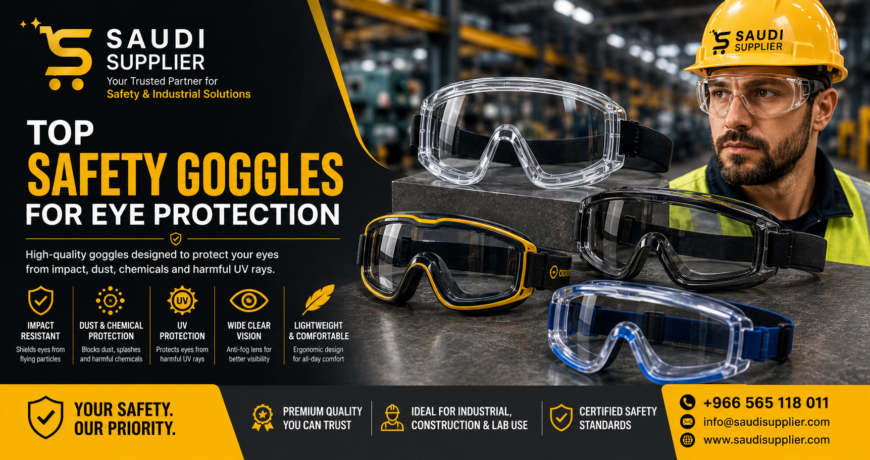
Top Safety Goggles for Eye Protection
Eye injuries are a serious workplace concern in construction, manufacturing, fabrication, maintenance, chemical handling, laboratories, and other industrial environments. Dust, flying particles, metal fragments, chemical splashes, sparks, and other hazards can cause painful injuries and, in severe cases, permanent vision damage.
For businesses in Saudi Arabia, selecting appropriate eye protection should therefore be based on the actual workplace hazard rather than simply choosing the most affordable pair of goggles. Safety goggles should provide suitable protection, fit comfortably, remain compatible with other PPE, and be maintained properly throughout their service life.
This guide explains how to choose safety goggles for industrial and professional applications, what features to evaluate, and how businesses can build an effective eye-protection program.
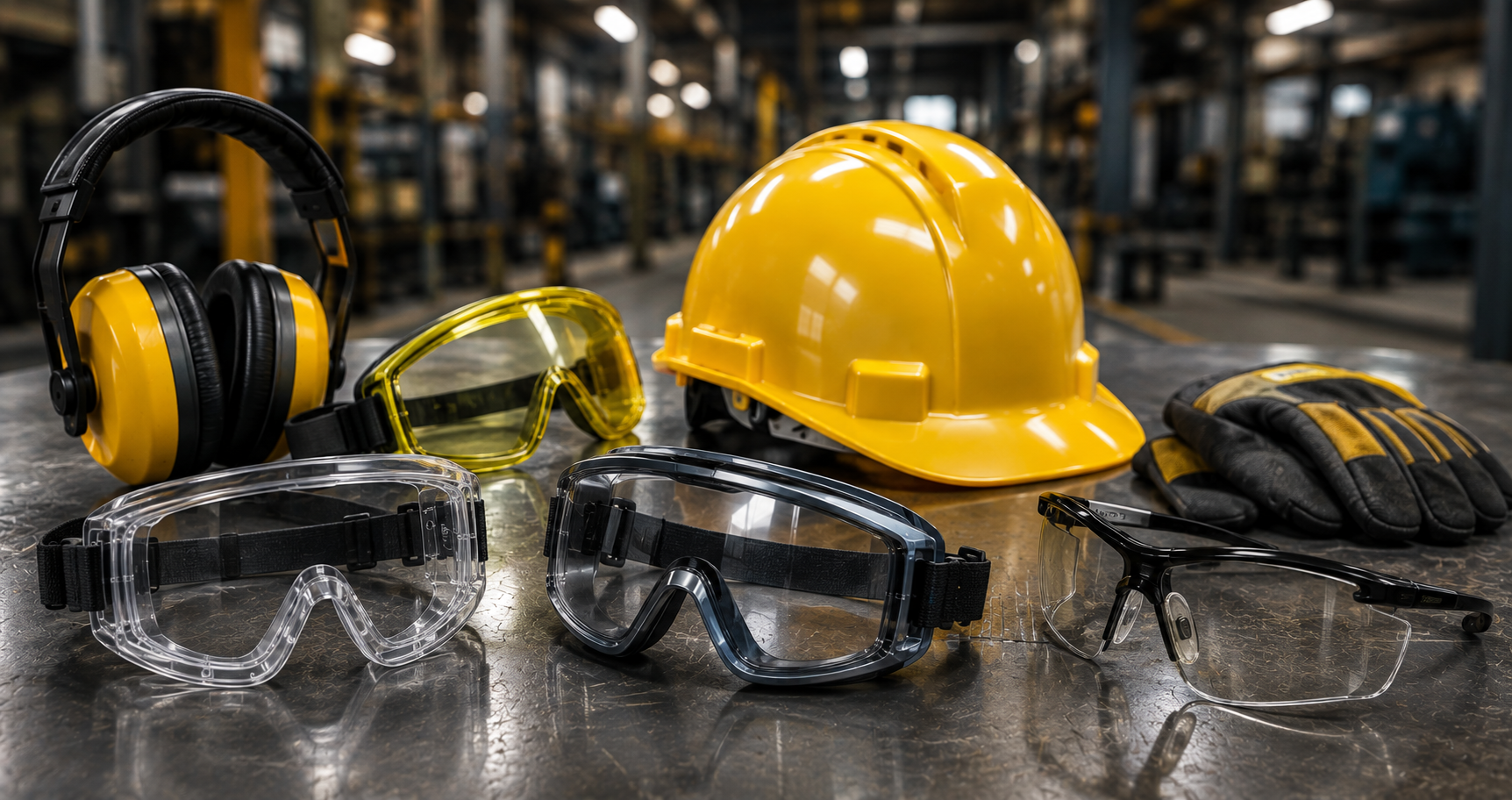
Why Safety Goggles Are Important in Industrial Workplaces
The eyes are particularly vulnerable because even relatively small particles can cause significant damage.
Common workplace hazards include:
- Flying metal particles
- Dust and construction debris
- Grinding fragments
- Chemical splashes
- Wood chips
- Sparks
- Liquid droplets
- Fine powders
- Welding-related hazards
- Pressurized materials
- Wind-blown particles
Standard safety glasses can provide useful protection for certain hazards, but goggles may offer greater coverage around the eyes and can be more appropriate where there is a risk of particles or liquids entering from the sides.
Businesses should conduct a task-specific risk assessment before selecting eye protection.
Companies looking for workplace protection products can explore Saudi Supplier and its Safety Equipment category.
Safety Goggles vs. Safety Glasses
Although the terms are sometimes used interchangeably, safety goggles and safety glasses are not identical.
| Feature | Safety Glasses | Safety Goggles |
|---|---|---|
| Eye coverage | Primarily front and sides | Greater coverage around eyes |
| Dust protection | Limited depending on design | Generally better with suitable sealing |
| Splash protection | Limited | Often better suited |
| Ventilation | Usually high | Depends on design |
| Comfort | Often lightweight | May feel more enclosed |
| Typical use | General impact hazards | Dust, splash, particles and specialized hazards |
The correct choice depends on the hazard assessment.
For example, a worker using a power tool that generates flying particles may need impact-rated eye protection, while a worker handling certain liquids may need goggles specifically designed for splash protection.
Key Features to Look for in Safety Goggles
1. Appropriate Impact Protection
For construction and industrial applications, impact protection is one of the most important considerations.
Goggles should be suitable for the type and level of impact hazard present.
Workers using:
- Grinders
- Drills
- Saws
- Cutting equipment
- Chisels
- Pneumatic tools
- Metalworking equipment
may be exposed to flying fragments.
The appropriate product should meet the applicable safety requirements for its intended use.
2. Secure and Comfortable Fit
Even technically capable goggles are ineffective if workers cannot wear them correctly.
Look for:
- Adjustable straps
- Comfortable nose areas
- Suitable frame design
- Secure positioning
- Appropriate size
- Minimal pressure points
Comfort matters because workers are more likely to wear PPE consistently when it does not cause unnecessary discomfort.
3. Anti-Fog Properties
Fogging can reduce visibility and encourage workers to remove their goggles.
Anti-fog lens treatments or suitable ventilation can help reduce this problem.
This can be particularly useful in environments where:
- Temperature changes are frequent
- Humidity is high
- Workers move between indoor and outdoor areas
- Physical activity causes perspiration
- Goggles provide close facial coverage
However, anti-fog features should not compromise the protection required for the specific hazard.
4. Scratch-Resistant Lenses
Industrial goggles are exposed to demanding conditions.
Scratched lenses can make it harder to see clearly and may encourage premature disposal or unsafe continued use.
Scratch-resistant coatings can improve durability, although they do not make lenses scratch-proof.
Businesses should still store goggles correctly and replace damaged or heavily scratched lenses according to the manufacturer’s instructions.
5. UV Protection Where Required
Some workplace environments expose workers to ultraviolet radiation.
For example, certain outdoor activities and specialized industrial processes can involve UV exposure.
Where UV protection is relevant, businesses should select products specifically designed and rated for that exposure.
Eye protection should always match the actual source and intensity of the hazard.
Choosing Safety Goggles for Different Applications
Different jobs require different forms of eye protection.
Construction Work
Construction workers may encounter:
- Dust
- Concrete particles
- Drilling debris
- Flying fragments
- Wood particles
- Metal fragments
Suitable impact and dust protection may be important depending on the task.
Grinding and Metalworking
Grinding can produce high-velocity particles and sparks.
Workers should use eye protection appropriate for the impact hazard, combined with additional face protection when required by the risk assessment.
Chemical Handling
Chemical work requires special attention because ordinary impact goggles may not provide adequate protection against chemical splashes.
Businesses should select goggles specifically intended for the chemical hazard involved and consider compatibility with the substances being handled.
Maintenance Operations
Maintenance workers often move between different tasks, making versatile PPE useful.
However, versatility should never mean compromising protection. Workers should use task-specific eye protection whenever hazards change.
Laboratories
Laboratory environments may require protection from:
- Chemical splashes
- Biological materials
- Glass fragments
- Fine particles
The appropriate goggles should be selected according to laboratory procedures and risk assessments.
How to Choose the Right Safety Goggles
A practical purchasing process can help businesses avoid unsuitable PPE.
Step 1: Identify the Hazard
Ask what can reach the worker’s eyes.
Is the hazard:
- Dust?
- Impact?
- Liquid splash?
- Chemical?
- Radiation?
- Heat?
- Fine particles?
Step 2: Determine the Required Protection
Once the hazard is identified, determine what level and type of eye protection is required.
Do not assume that one product is suitable for every workplace.
Step 3: Check Applicable Standards
Review the manufacturer’s technical documentation and confirm that the product meets applicable standards and requirements for its intended application.
For safety-critical procurement, businesses should maintain appropriate product documentation.
Step 4: Check Compatibility With Other PPE
Safety goggles may need to be worn alongside:
- Safety helmets
- Respirators
- Hearing protection
- Face shields
- Welding helmets
- Protective clothing
Make sure the combination does not create gaps or interfere with proper fitting.
Step 5: Consider Comfort and Worker Acceptance
If goggles are uncomfortable, workers may remove them during tasks.
Consider:
- Weight
- Strap adjustment
- Ventilation
- Lens clarity
- Fit
- Sweat management
- Compatibility with prescription eyewear where applicable
Prescription Eyewear and Safety Goggles
Workers who wear prescription glasses should not simply assume that ordinary goggles will fit safely over them.
Depending on the application, businesses may consider:
- Over-the-glasses safety goggles
- Prescription safety eyewear
- Manufacturer-approved compatible designs
The chosen solution should provide the required protection without compromising fit or visibility.
Proper Use of Safety Goggles
Buying good goggles is only the first step.
Workers should be trained to:
- Inspect the goggles before use.
- Ensure the lens is clean.
- Adjust the strap correctly.
- Wear the goggles throughout the hazardous activity.
- Avoid placing them on contaminated surfaces.
- Report damaged equipment.
- Clean and store the goggles according to manufacturer instructions.
Eye protection should be worn before entering the hazard area rather than after exposure begins.
Cleaning and Maintenance
Proper maintenance can extend the useful life of reusable safety goggles.
A basic maintenance routine may include:
- Cleaning lenses regularly
- Using approved cleaning products
- Avoiding abrasive materials
- Inspecting straps and seals
- Checking ventilation openings
- Looking for cracks
- Checking lens clarity
- Storing goggles in a clean location
Workers should follow the manufacturer’s cleaning instructions because unsuitable chemicals or cleaning methods may damage coatings.
When Should Safety Goggles Be Replaced?
There is no universal replacement interval for every type of safety goggle.
Replace goggles when they have:
- Cracked lenses
- Significant scratches
- Damaged frames
- Broken straps
- Deformed components
- Poor visibility
- Damaged seals
- Contamination that cannot be safely removed
Disposable products should be replaced according to their intended use and manufacturer’s instructions.
For reusable products, organizations should establish inspection and replacement procedures based on working conditions.
Common Mistakes When Selecting Eye Protection
Choosing Based Only on Price
The cheapest option may not provide appropriate protection or durability.
Using the Same Goggles for Every Task
Different hazards require different protective characteristics.
Ignoring Compatibility
Goggles must work correctly with other PPE.
Allowing Damaged Goggles to Remain in Service
Damaged eye protection should be removed and replaced promptly.
Neglecting Worker Training
Employees need to understand why eye protection is required and how to use it correctly.
Poor Storage
Leaving goggles exposed to dust, chemicals, heat, or physical damage can reduce their condition and usability.
Building an Effective Eye Protection Program
A workplace eye-protection program should go beyond distributing goggles.
Businesses should:
- Conduct hazard assessments
- Select suitable products
- Train employees
- Provide replacement PPE
- Monitor compliance
- Inspect equipment
- Maintain records
- Review incidents and near misses
Management should also consider engineering and administrative controls that reduce exposure to eye hazards.
For example, machine guarding, dust extraction, enclosed processes, splash controls, and safe operating procedures may reduce the hazard before PPE is considered.
Why Quality PPE Matters
Quality PPE can contribute to worker protection, comfort, durability, and consistent use.
However, businesses should not select products based on brand name alone. Procurement teams should evaluate:
- Protection level
- Applicable standards
- Product specifications
- Fit
- Durability
- Compatibility
- Supplier reliability
- Warranty where applicable
- Replacement availability
- Total cost of ownership
Saudi Supplier’s PPE category can be used as part of the procurement process for workplace protective equipment.
Safety Goggles Procurement Checklist
| Requirement | What to Check |
|---|---|
| Hazard | Impact, dust, splash, chemical, radiation or other risk |
| Lens | Clarity, protection and coating |
| Fit | Secure, comfortable and appropriate |
| Ventilation | Suitable for the working environment |
| Impact protection | Appropriate for the task |
| Compatibility | Works with other PPE |
| Standards | Applicable product requirements |
| Maintenance | Cleaning and inspection needs |
| Replacement | Availability and expected service life |
| Documentation | Manufacturer instructions and specifications |
Conclusion
Choosing the right safety goggles is an important part of protecting workers from eye injuries in construction, manufacturing, maintenance, chemical handling, and other industrial environments.
The best safety goggles are not necessarily the most expensive or most heavily marketed. They are the ones that provide the appropriate protection for the identified hazard, fit the worker correctly, remain compatible with other PPE, and can be maintained properly.
Businesses in Saudi Arabia should combine suitable eye protection with hazard assessments, engineering controls, employee training, equipment inspections, and clear safety procedures.
By taking a systematic approach to eye protection, organizations can help reduce preventable injuries while creating a safer and more professional working environment.
Frequently Asked Questions
1. What are the best safety goggles for industrial work?
The best safety goggles depend on the workplace hazard. Construction and grinding tasks may require suitable impact protection, while chemical handling may require splash-resistant goggles specifically designed for chemical exposure.
2. Are safety goggles better than safety glasses?
Neither is universally better. Safety glasses may be suitable for many impact hazards, while goggles can provide greater coverage and may be more appropriate for dust, liquid splashes, or certain specialized hazards.
3. What should I look for when buying safety goggles?
Consider the hazard, required protection level, applicable standards, lens quality, fit, comfort, ventilation, compatibility with other PPE, durability, and manufacturer instructions.
4. Can safety goggles be worn over prescription glasses?
Some goggles are specifically designed to fit over prescription eyewear. Another option may be prescription safety eyewear. The chosen product should provide adequate protection without compromising fit or visibility.
5. How often should safety goggles be replaced?
Replacement depends on the product, working conditions, and condition of the goggles. They should be replaced when lenses are significantly scratched, cracked, damaged, contaminated, or when other components no longer provide reliable protection.
6. Are anti-fog safety goggles suitable for construction work?
Anti-fog goggles can be useful in environments where condensation affects visibility. However, they should also provide the protection required for the specific construction hazard.
7. How should industrial safety goggles be cleaned?
Follow the manufacturer’s cleaning instructions. Generally, lenses should be cleaned with an approved method that does not damage protective coatings. Abrasive materials and unsuitable chemicals should be avoided.
8. Why is eye protection important in industrial workplaces?
Eye protection can help protect workers from flying particles, dust, chemical splashes, sparks, and other hazards that may cause temporary or permanent eye injuries.
Contact Saudi Supplier
Phone: +966565118011
Email: info@saudisupplier.com
Website: Saudi Supplier
